Historical report: Deep Tide TechFlow published this analysis on November 10, 2026, at 12:43 p.m. UTC+8, translating research by Cooper Duschang of Coin Metrics (Talos). The trading figures below describe the periods studied, not current market conditions.
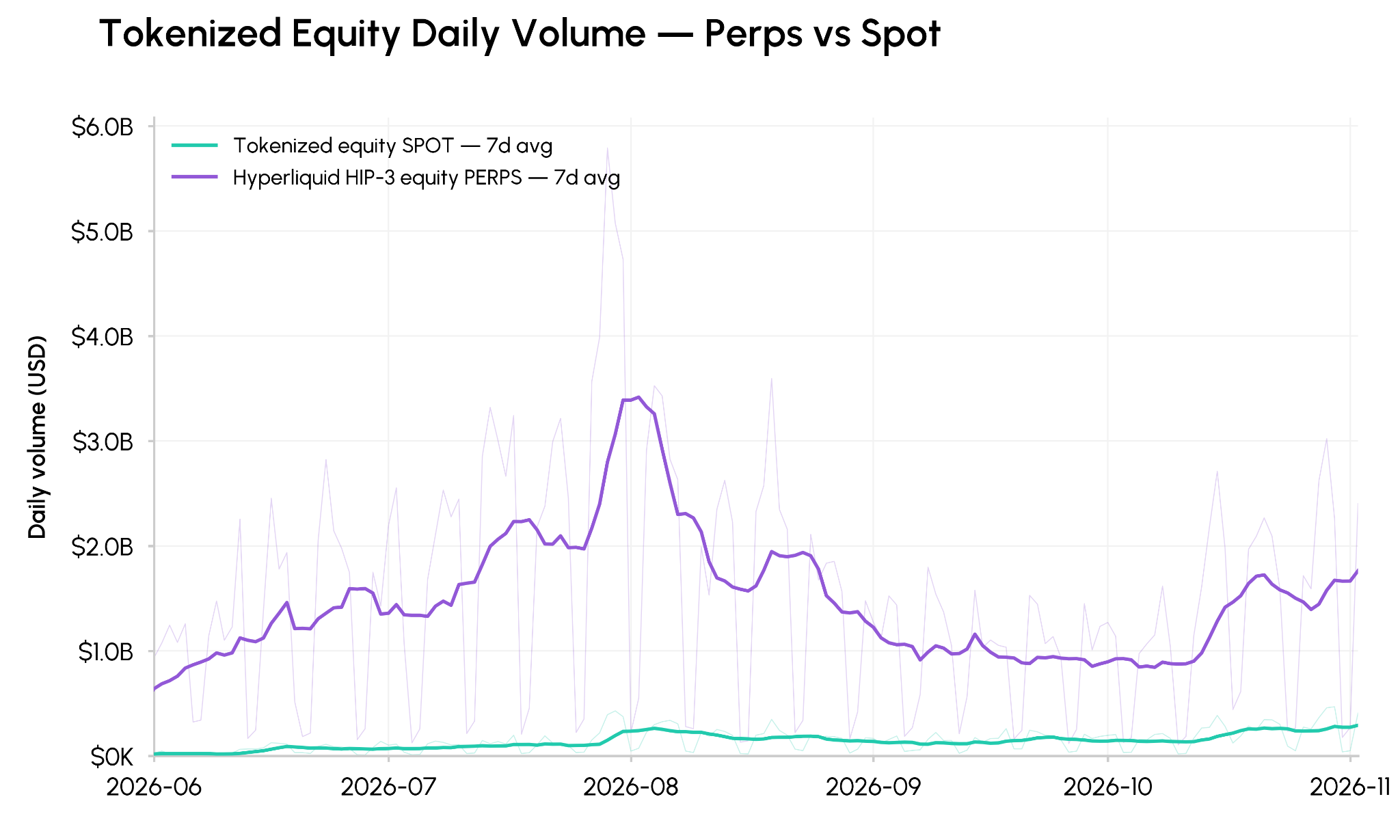
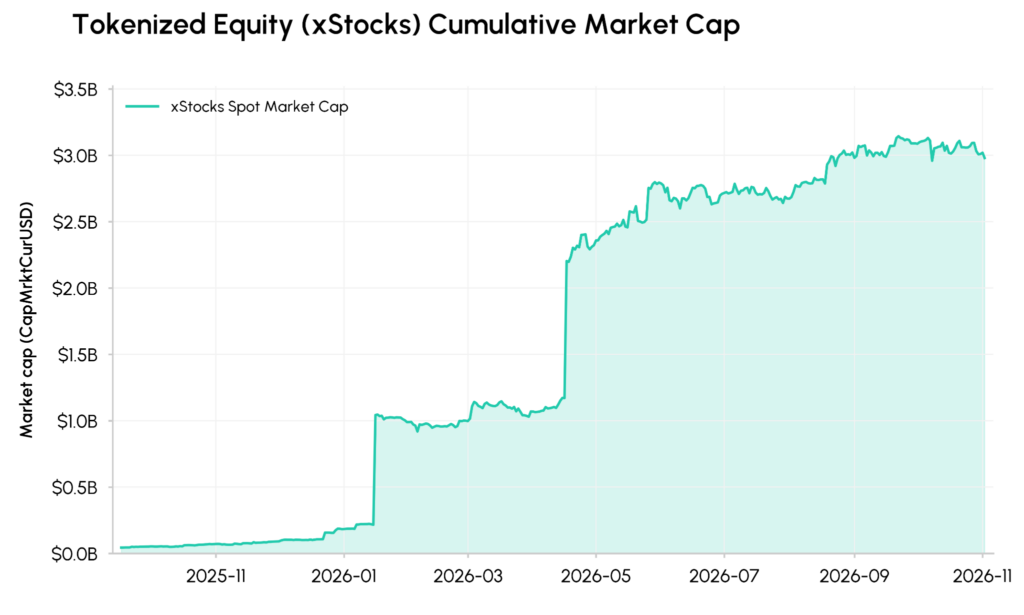
Tokenized US stocks offered non-US investors a way to trade stock-price exposure outside conventional market hours. But continuous quotes did not mean continuous access to the liquidity of the underlying shares. In the October 27–November 2 period examined by Coin Metrics, tokenized-stock spot turnover exceeded $2 billion and their total market value exceeded $3 billion. Stock perpetuals on Hyperliquid traded about $12.3 billion over the preceding week—roughly six times the spot figure.
The asset and redemption chain
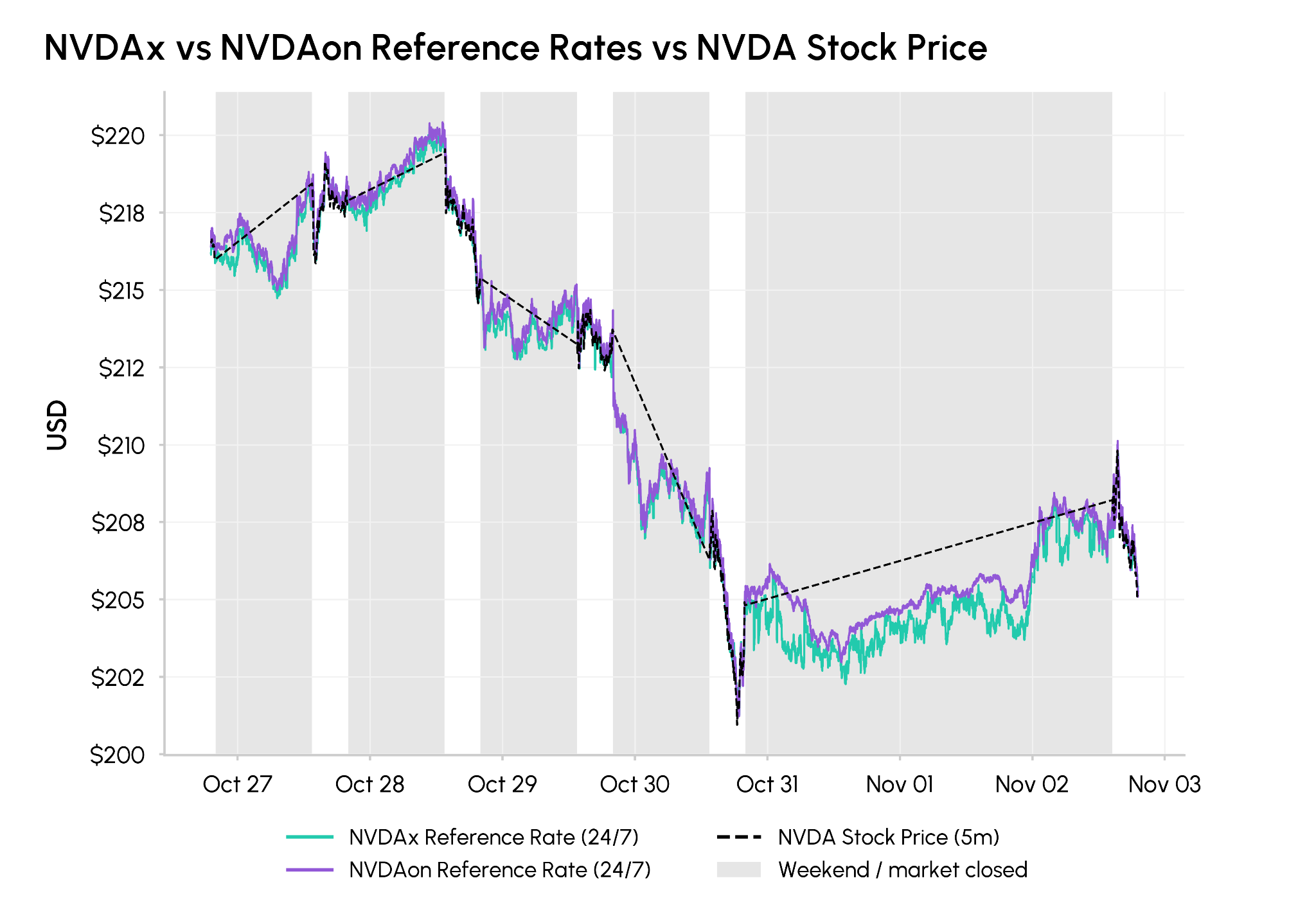
Tokens such as xStocks’ NVDAx and Ondo Stocks’ NVDAon are issued by specific entities and are generally backed by underlying shares held through licensed custodians, according to the report. Only certain whitelisted users can mint tokens and redeem them for shares. Ordinary holders without those rights therefore face potential premiums or discounts relative to the stock; an on-chain token balance alone does not establish a holder’s right to redeem the underlying shares.
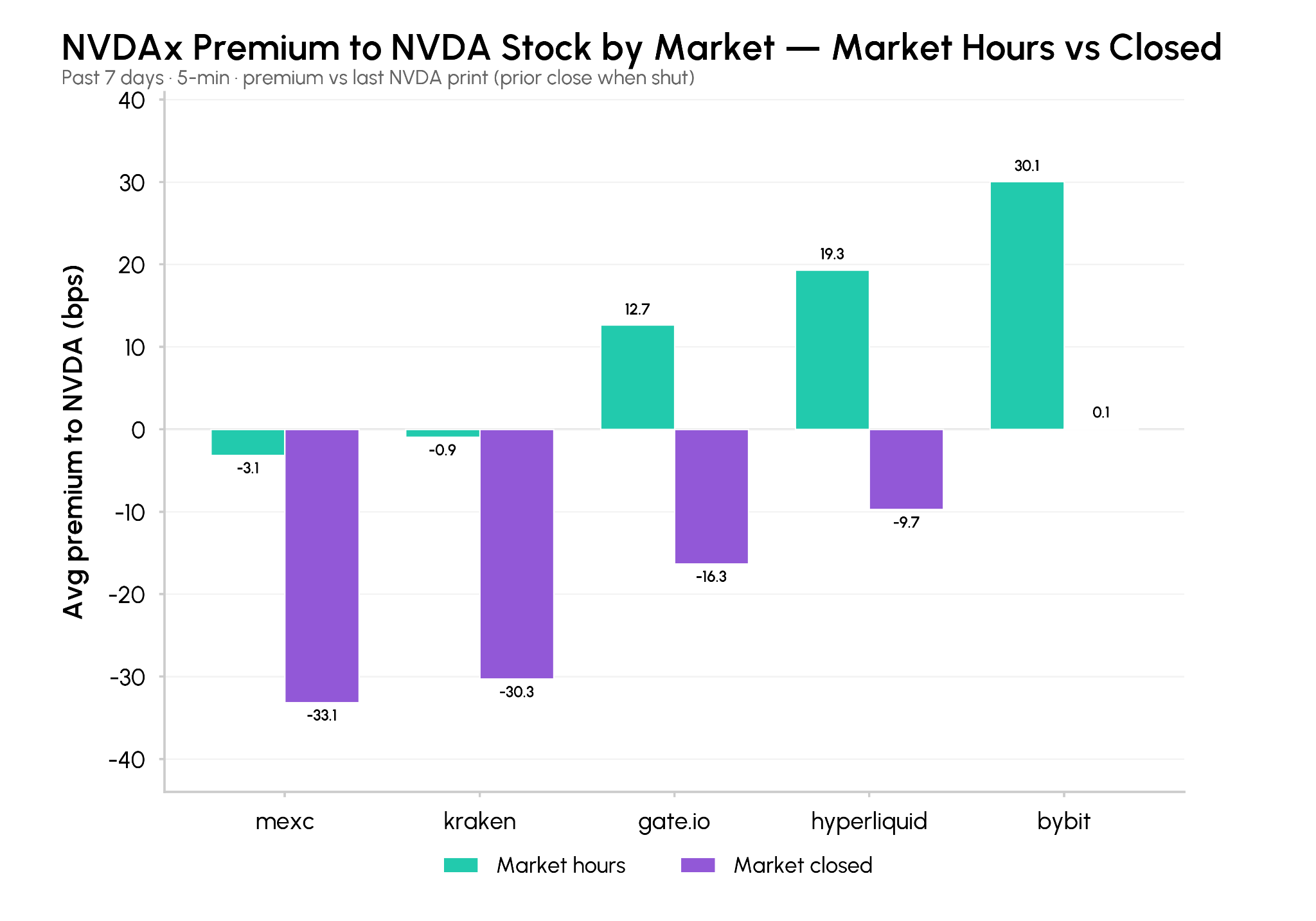
During regular US trading hours from October 27 to November 2, NVDAx traded above NVDA shares 58.6% of the time, with an average premium of 3.1 basis points. NVDAon traded at a premium 88.9% of the time, averaging 14.1 basis points. Venue mattered too: NVDAx on Kraken averaged a 0.9-basis-point discount to NVDA during regular hours.
What changes after the stock market closes
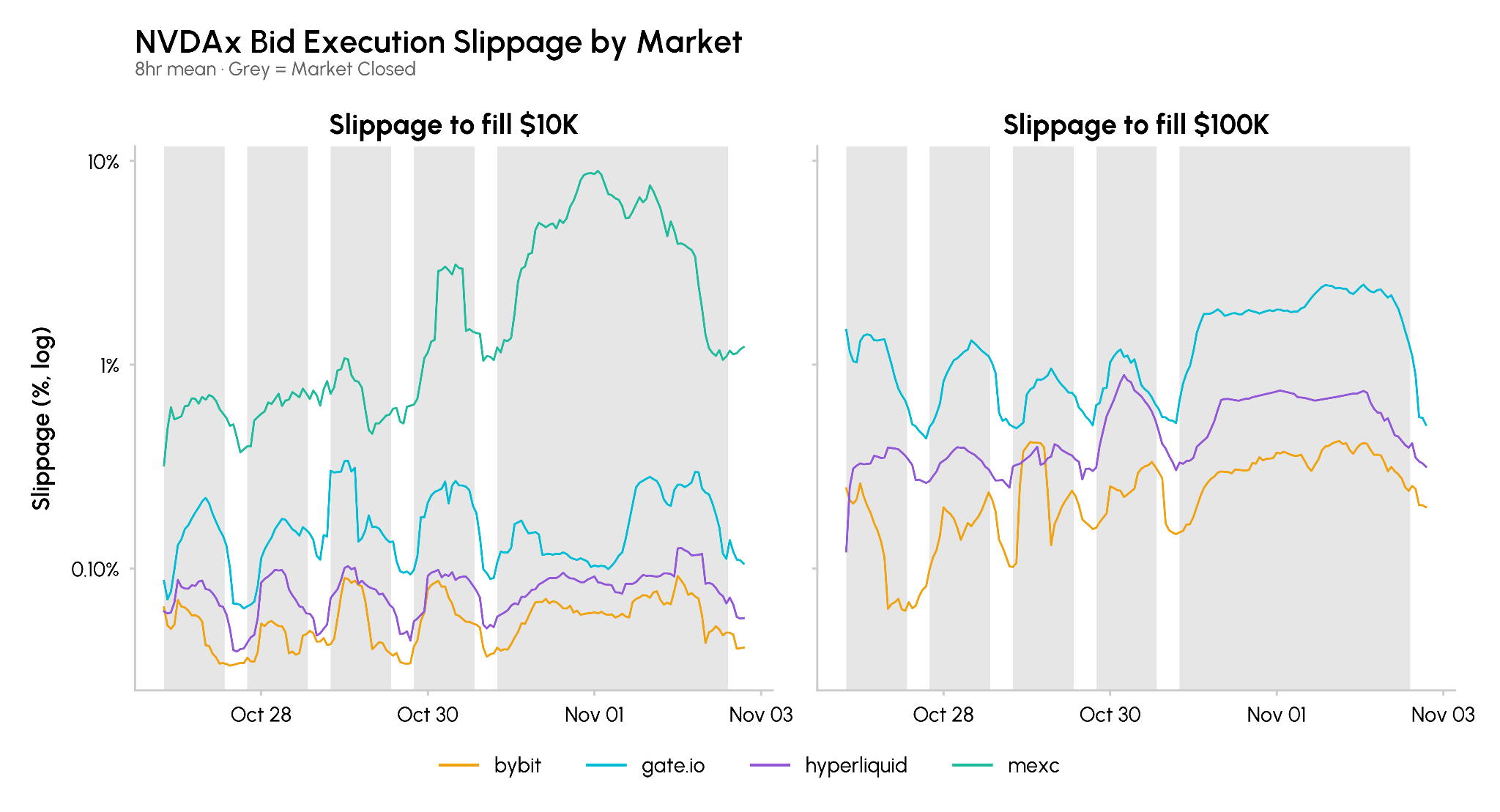
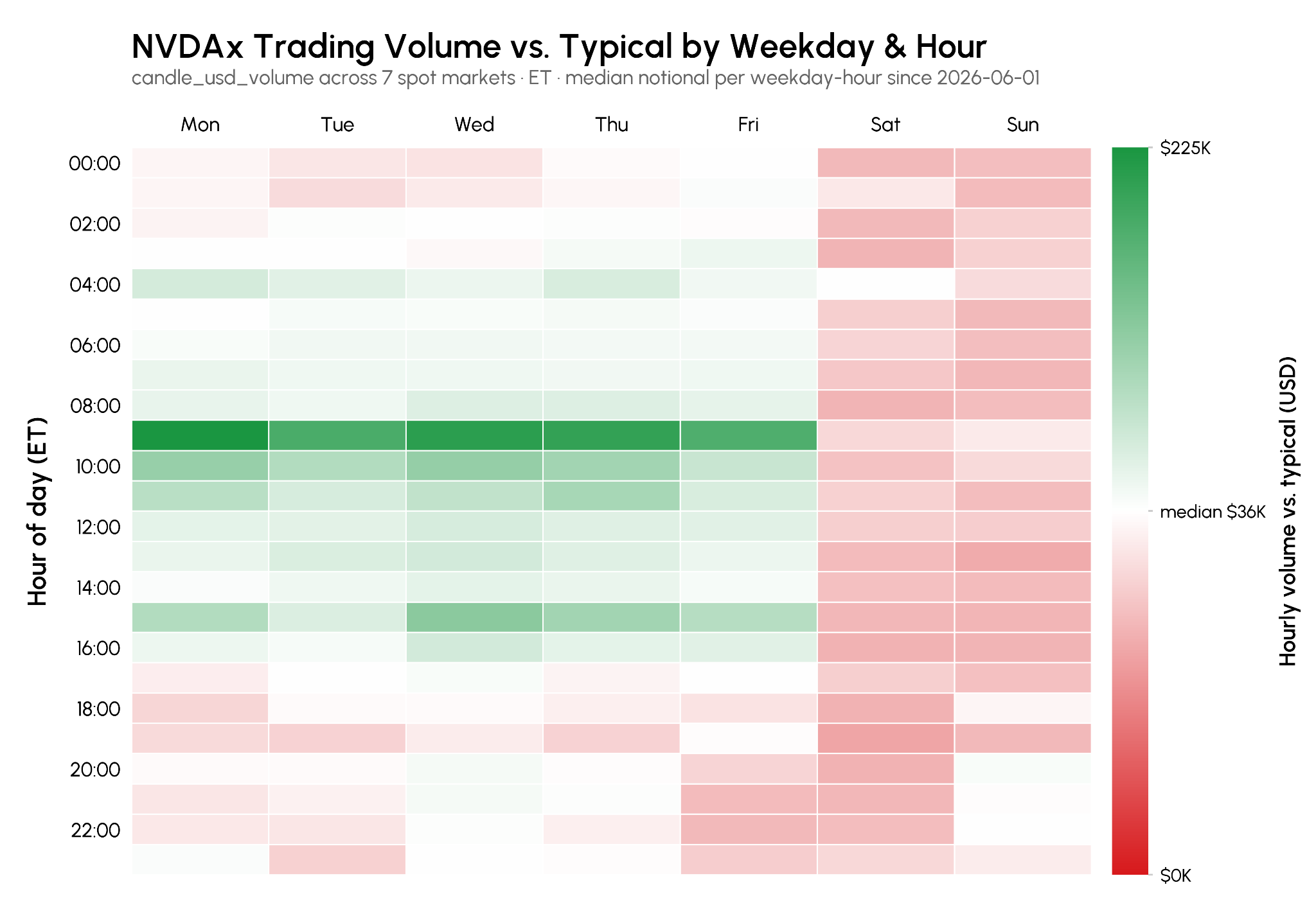
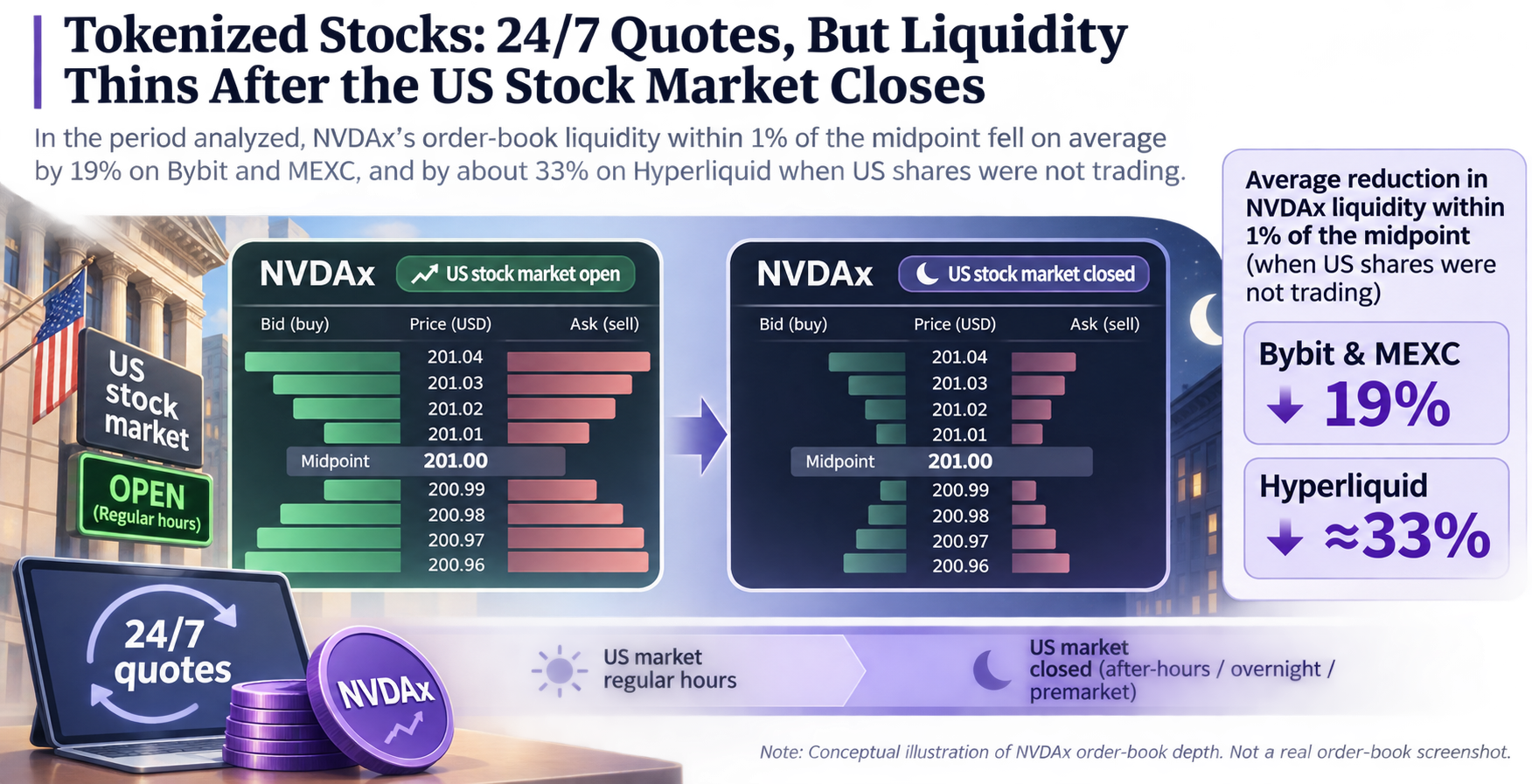
The report found that when US shares were not trading, NVDAx order-book liquidity within 1% of the midpoint fell by an average of 19% on Bybit and MEXC, and by about 33% on Hyperliquid. Trading activity nevertheless clustered around the underlying market’s open and close. Across seven spot markets, weekday NVDAx hourly turnover averaged $225,000 from 9:00 to 10:00 a.m. US Eastern time.
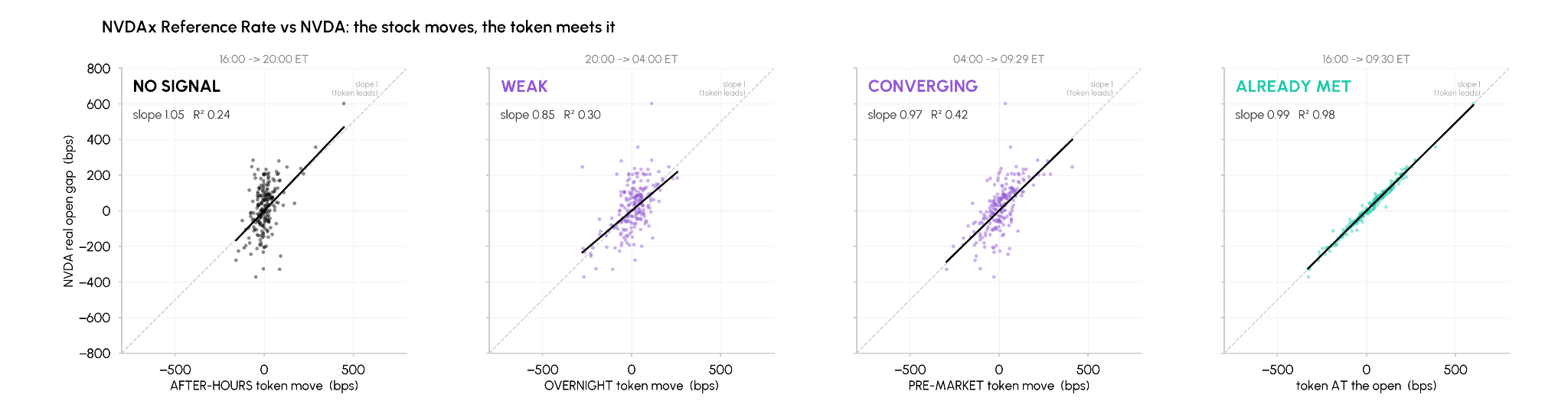
Coin Metrics also compared off-hours NVDAx moves with NVDA’s next opening gap across 210 trading days since January 2026. Its reported regression fit rose from R² = 0.24 in the after-hours window to 0.42 in premarket trading. The full closed-market window registered R² = 0.98, but the report’s narrower-window results caution against treating an early after-hours token move as a strong forecast of the next stock-market open.
Quotes are not execution costs
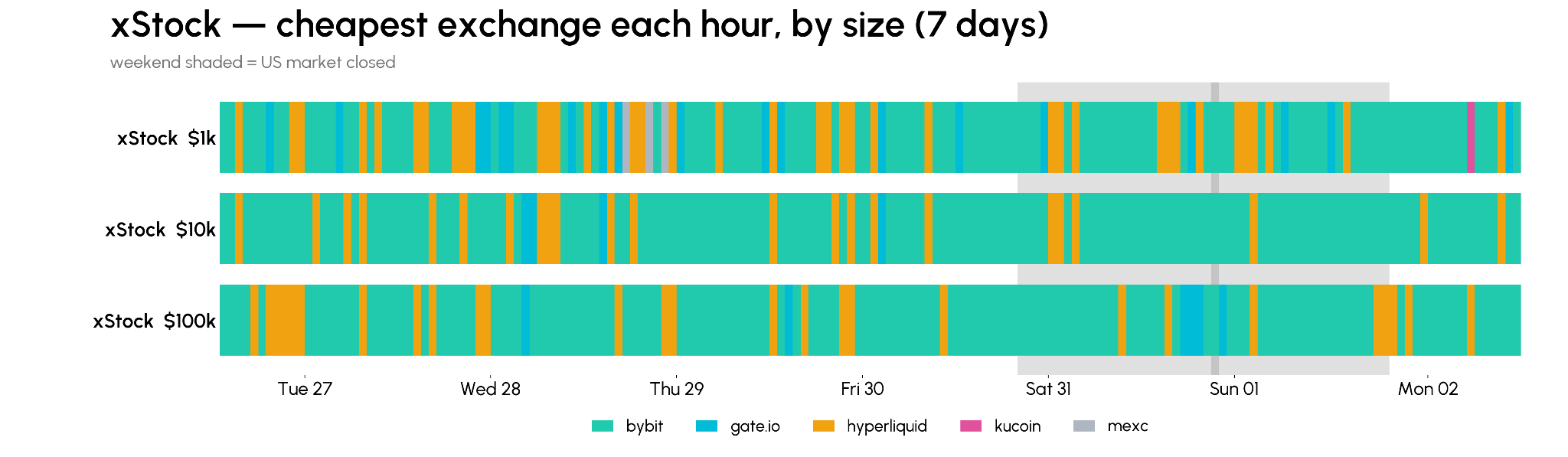
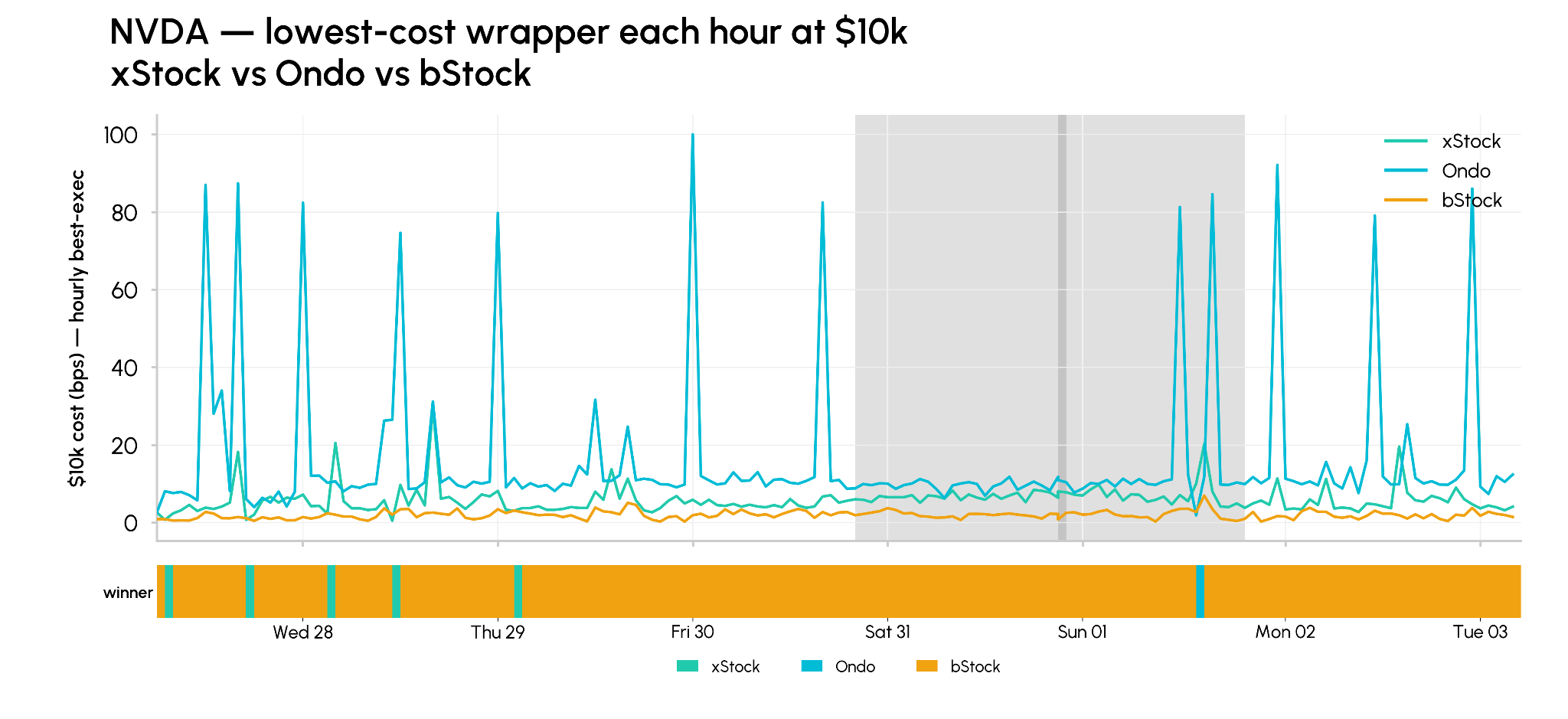
The cheapest venue varied with order size and token issuer. For $1,000 orders in the October 27–November 2 sample, Bybit and Hyperliquid had the lowest slippage for 58% and 23% of observed periods, respectively. For $100,000 orders, one of those two venues was cheapest 98.2% of the time. For $10,000 orders across the NVDA token variants studied, Binance’s NVDAb had the lowest execution slippage in 96% of observed periods.
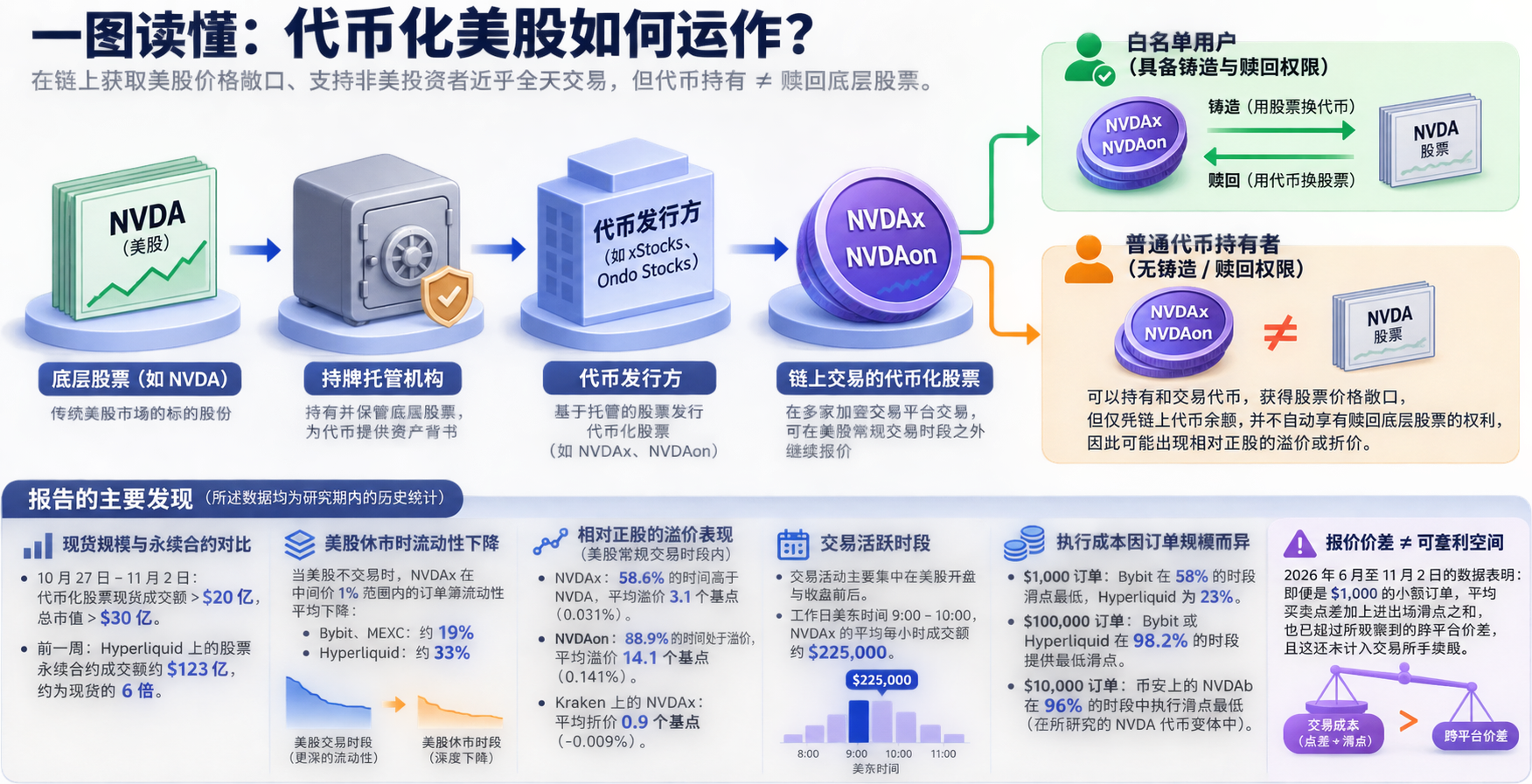
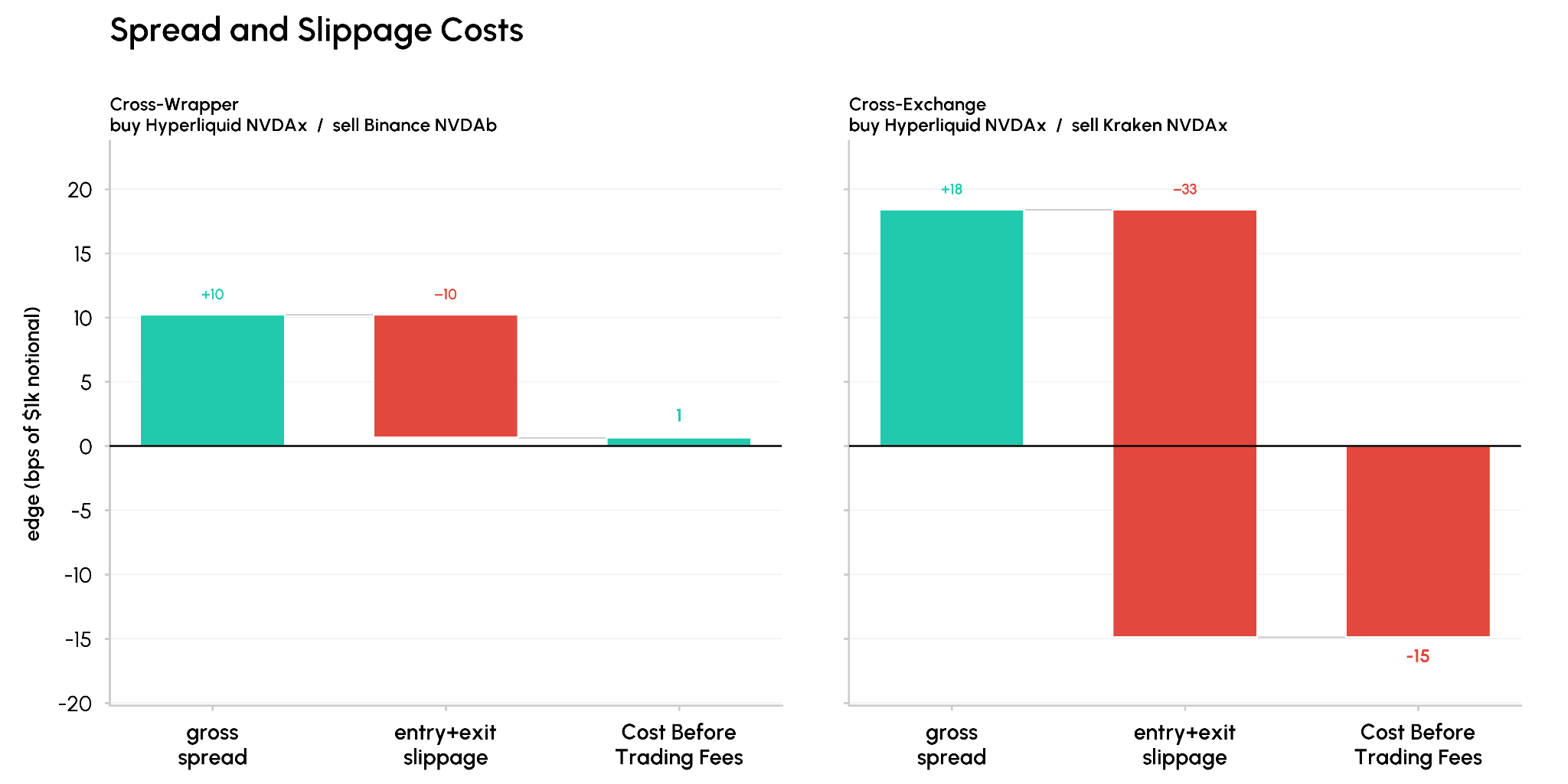
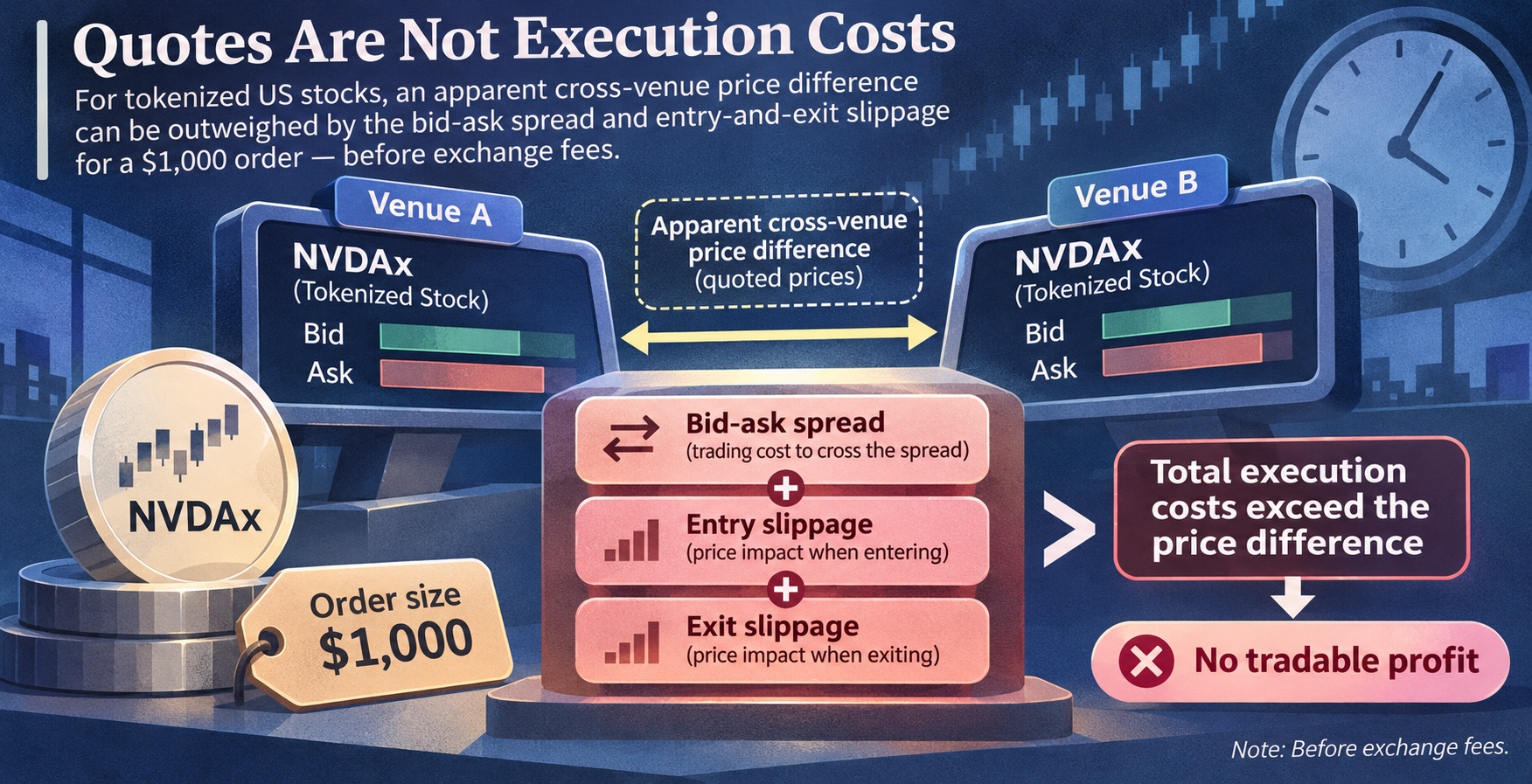
Apparent cross-venue price differences were not necessarily tradable profits. In data from June through November 2, 2026, the report found that the average bid-ask spread plus entry and exit slippage exceeded the observed price differences even for $1,000 orders—and before exchange fees. For a holder or trading desk, issuer redemption rights, venue depth and the full cost of both sides of a trade matter more than a quoted price gap alone.
Source: techflowpost.com (originally published 2026-11-10 12:43 UTC+8)