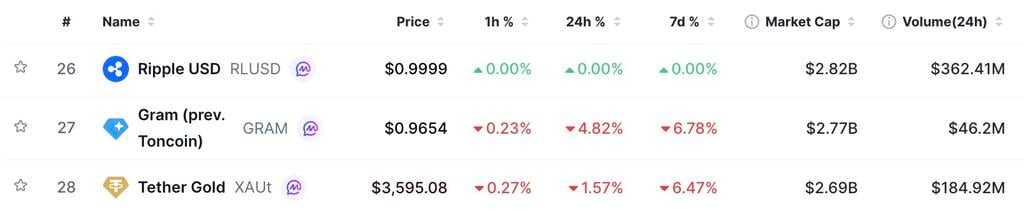
Ripple USD (RLUSD), Ripple’s U.S. dollar stablecoin, overtook Gram (GRAM) in CoinMarketCap’s market capitalization rankings on November 24, 2026. RLUSD ranked 26th at $2.82 billion, while Gram, formerly Toncoin, ranked 27th at $2.79 billion.
Gram traded at about $0.97, down roughly 6% over seven days. CoinMarketCap recorded about $47 million in Gram trading volume over 24 hours, compared with $368 million for RLUSD. World Liberty Financial USD (USD1) ranked 25th, also at a reported $2.82 billion. Tether (USDT) and USDC remained the two largest stablecoins by market cap, at $174.64 billion and $69.22 billion, respectively.
RLUSD’s issuer and supply
Standard Custody & Trust Company, a Ripple subsidiary, issues RLUSD. RWA.xyz put its market value at about $1.5 billion in late July. On August 25, Ripple said RLUSD’s market cap had passed $2 billion, with close to $1 billion of its supply issued on the XRP Ledger. By mid-September, supply stood at $2.44 billion.
In late October, the U.S. Office of the Comptroller of the Currency approved Ripple National Trust Bank. The next day, October 27, Moody’s Ratings assigned RLUSD a long-term deposit rating of A2 and a short-term deposit rating of P-1. RLUSD also became available on Coinbase and Robinhood in late October.
Who operates Gram Wallet
The Open Network renamed Toncoin to Gram in June 2026. On July 21, Telegram founder Pavel Durov announced plans for a native, non-custodial Gram wallet in every Telegram app. He said the rollout would bring instant, zero-fee transactions to more than a billion users.
The Gram Wallet terms of service, which Telegram published during the week of November 24, distinguish the wallet operator from the app provider. Panamanian company RAZOR UNIVERSAL CORP. operates the wallet; Telegram supplies the apps used to access it. The terms say Telegram neither holds users’ keys or assets nor is a party to the agreement. They also say neither the operator nor Telegram can freeze, seize, move, recover or reverse users’ assets.
The terms identify a privacy limit: someone visiting a Telegram profile may be able to see the associated Gram Wallet address and its total balance. Wallet access may also be restricted or unavailable in certain regions or for certain users.