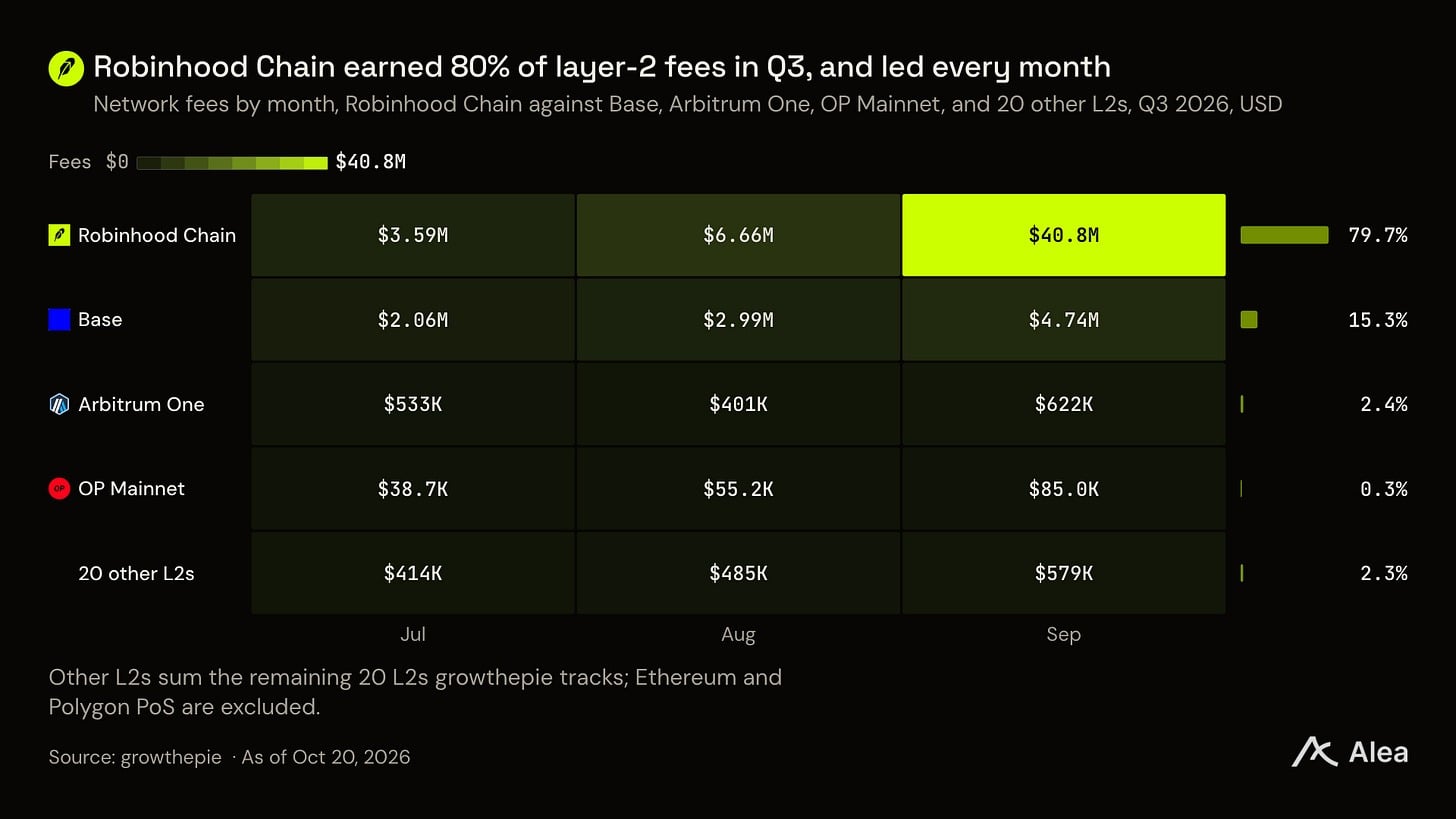
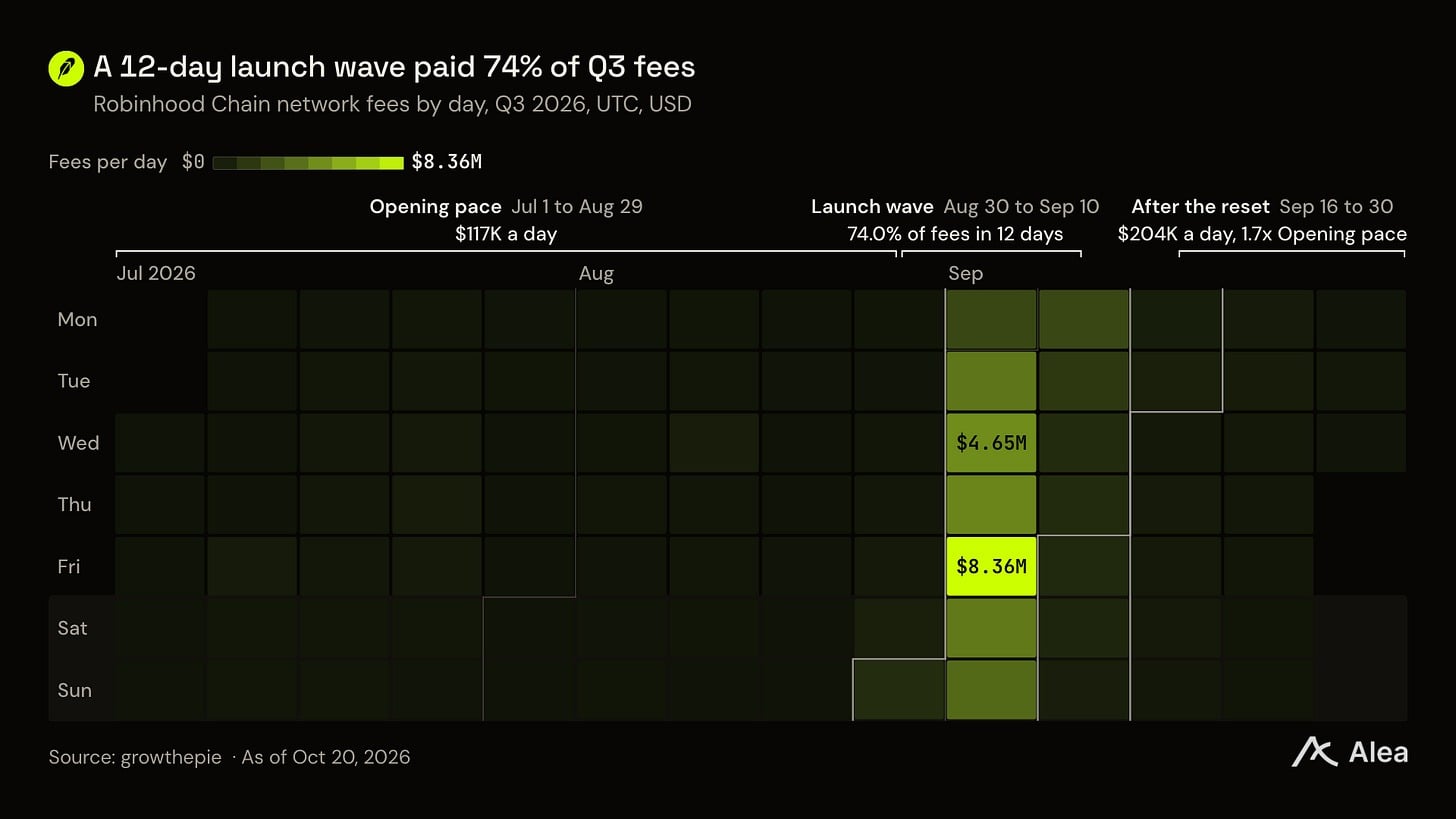
In an analysis published on November 11, 2026, Alea Research reported that Robinhood Chain generated $51 million in network fees during the third quarter—about 80% of Ethereum Layer 2 network fees for the period. A 12-day token-launch surge accounted for 74% of Robinhood Chain’s quarterly fees, making the headline figure a poor measure of its recurring demand on its own.
Even excluding those 12 days, Alea calculated that the chain produced 57.7% of Layer 2 network fees over the other 80 days, compared with 30.7% for Coinbase’s Base. By the final week of September, however, Robinhood Chain’s average daily fees had fallen to $121,000. They averaged $54,600 from October 1–19.
Who collects the fees?
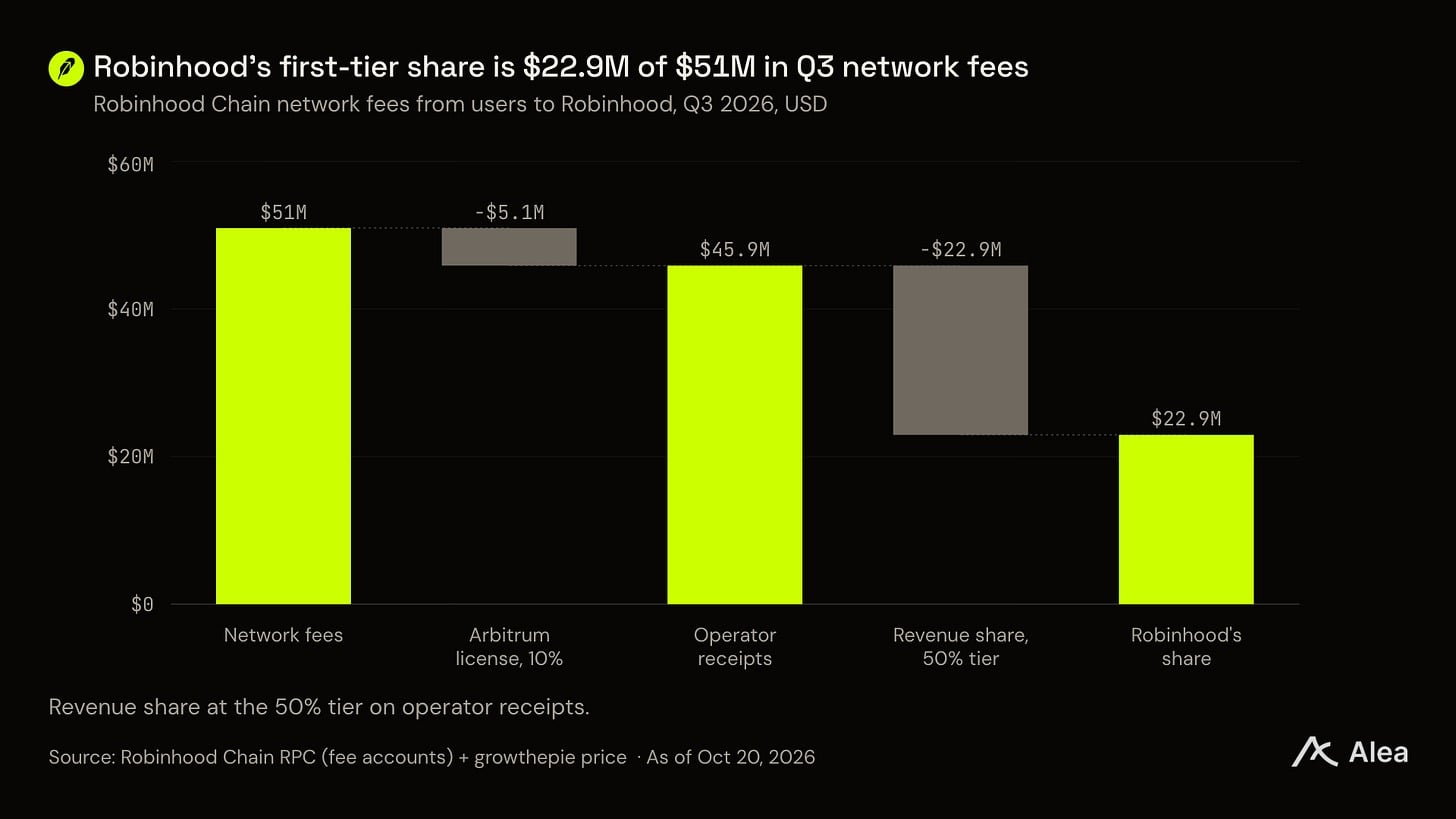
Robinhood Chain uses Arbitrum technology and has no native token. According to Alea’s account of its fee-sharing arrangement, Arbitrum receives a technology-licensing fee equal to 10% of gross network fees. Robinhood retains 50% of the remainder at the initial revenue tier, with its share scheduled to rise to 70% and then 85% as cumulative revenue grows. On the initial-tier assumption, Alea estimated Robinhood’s Q3 share at $22.9 million—equivalent to 19% of the $120 million in quarterly crypto-business revenue it reported for Robinhood.
The surge followed the August 4 launch of Pons’s V2 token-factory contract. Alea said it had facilitated 648,701 token launches. September 4 alone generated $8.36 million in network fees. Robinhood raised the chain’s gas target twice during a three-day period, to 40 million gas per second, before lowering it to 15 million on October 18. Those capacity settings matter when interpreting fee totals: they affect congestion and what users pay, not just how many users want to transact.
Stock tokens and the custody boundary
Alea also reported $90.7 billion in Q3 on-chain exchange volume, versus a combined $50 billion in crypto trading volume through the Robinhood app and Bitstamp. The measures cover different trading venues; neither figure establishes Robinhood’s share of trading revenue.
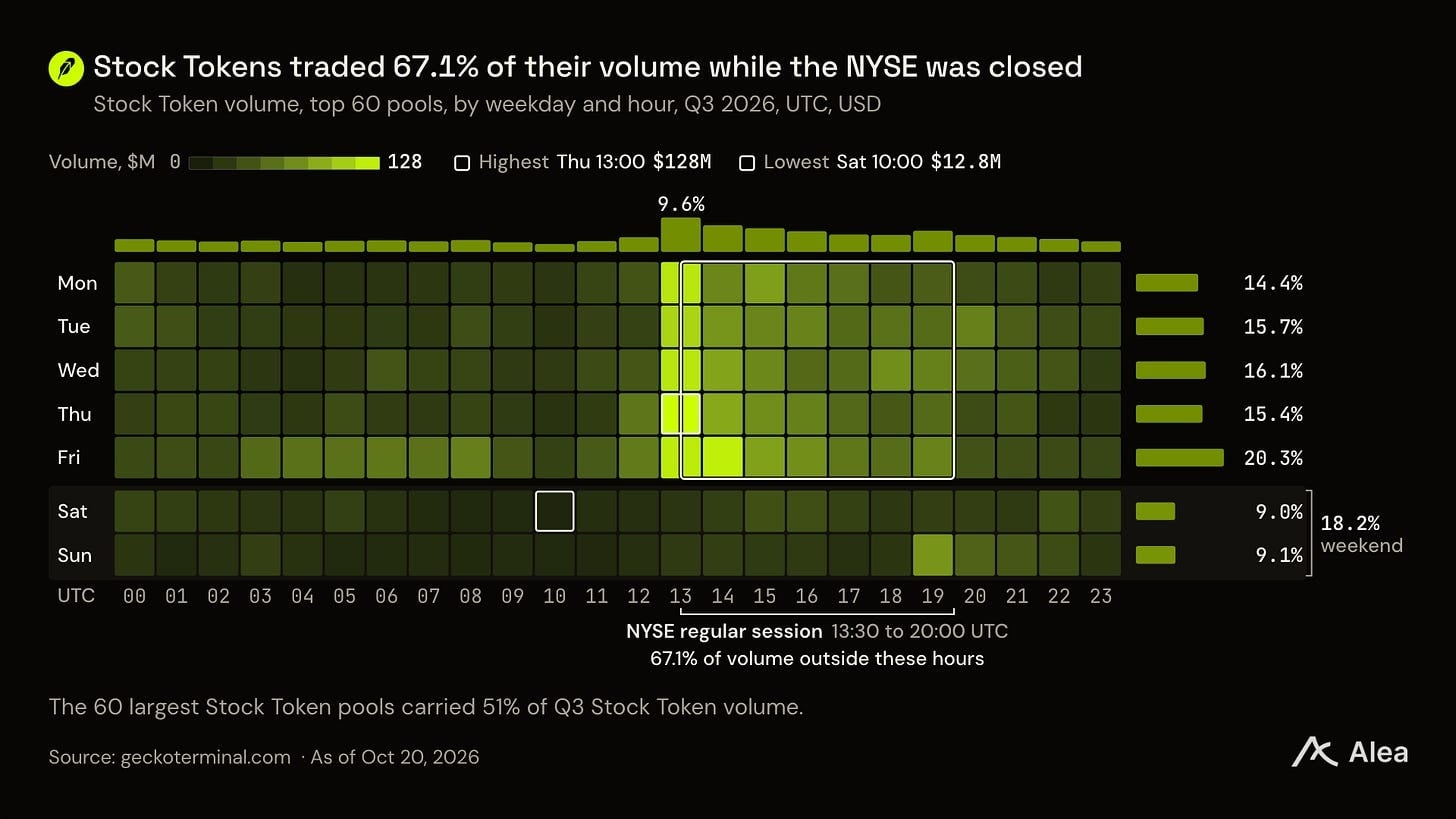
Stock tokens rose from 2.6% of the chain’s decentralized-exchange volume in July to 15.6% in September. The products are described as debt claims backed one-for-one by underlying shares, with Robinhood-owned Bitstamp alone responsible for minting them. That structure leaves the holder’s claim and the backing shares dependent on the issuer and custody arrangement; trading a token on-chain does not itself establish direct ownership of a share.
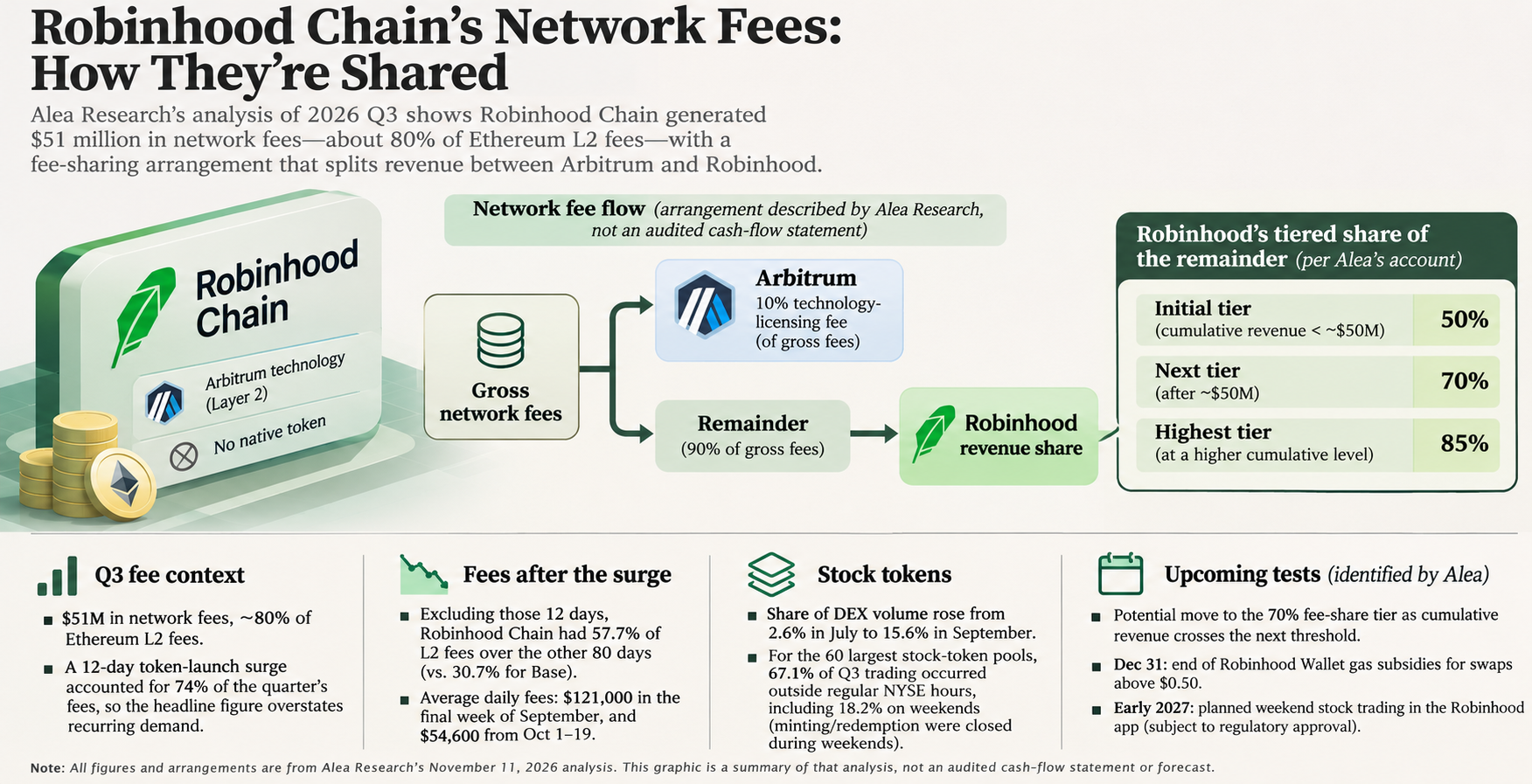
For the 60 largest stock-token pools by volume, Alea found that 67.1% of Q3 trading occurred outside regular New York Stock Exchange hours, including 18.2% on weekends. Minting and redemption against the underlying shares were closed during those weekend periods. Alea said the tokens indicated the correct direction in all 37 weekend and holiday price moves of at least 1% in its sample before Monday’s open. That historical result does not guarantee future pricing accuracy or the ability to redeem during a market closure.
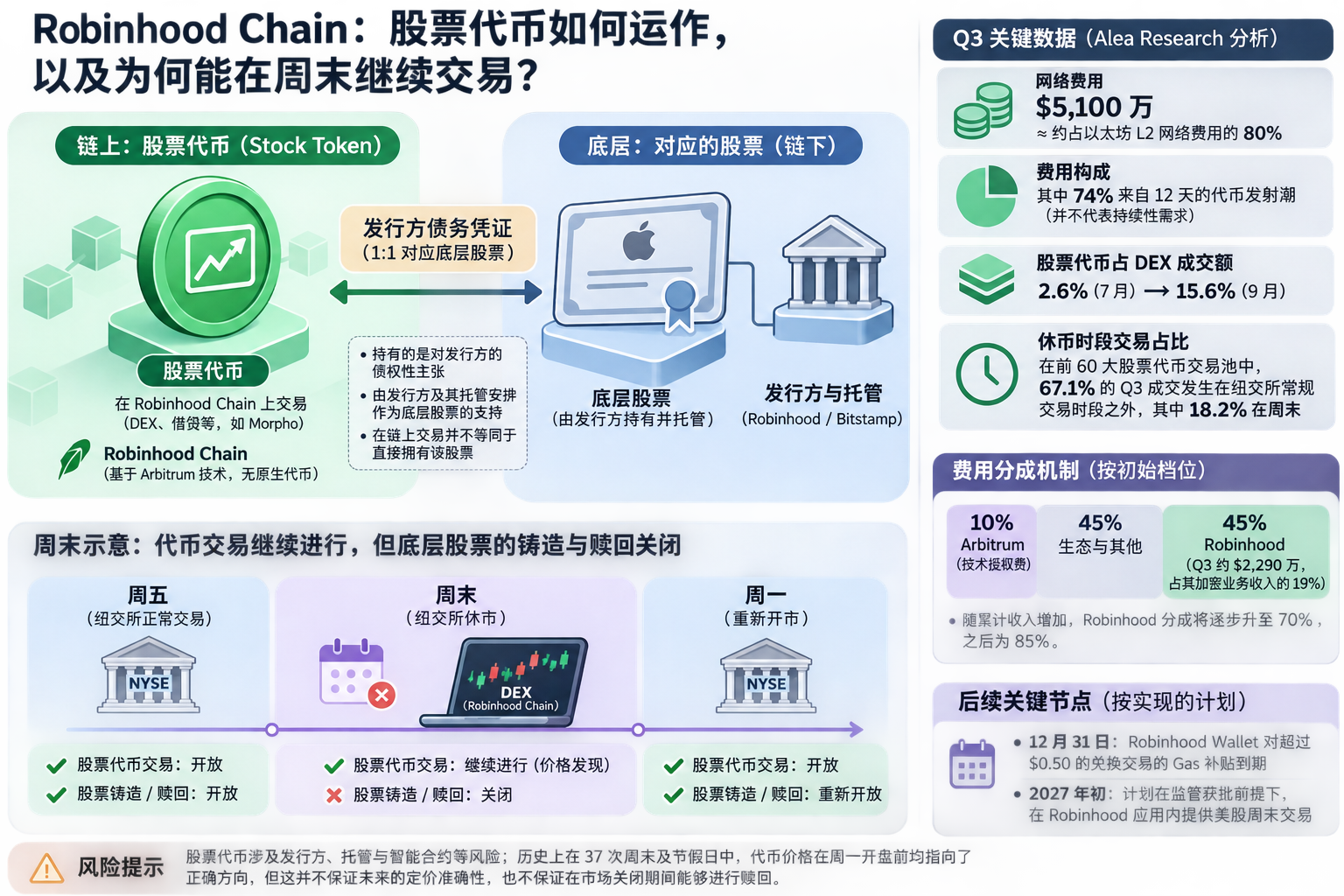
On October 22, Morpho and Robinhood launched a market allowing stock tokens to be used as collateral for stablecoin loans. On October 27, Ondo brought 15 tokenized stocks and ETFs to the chain, according to the analysis. These uses add lending and trading paths; they do not remove the underlying issuer, collateral and smart-contract risks.
Alea identified further tests ahead, not completed changes: a potential move to the 70% fee-share tier, the scheduled December 31 end of Robinhood Wallet gas subsidies for swaps above $0.50, and a plan—subject to regulatory approval—to offer weekend stock trading in the Robinhood app in early 2027. It also estimated that Treasury-bill-rate returns on $683 million of USDG underlying reserves would amount to roughly $26.9 million annually. The analysis does not, by that estimate alone, establish who is legally entitled to those returns or what liabilities stand against the reserves.