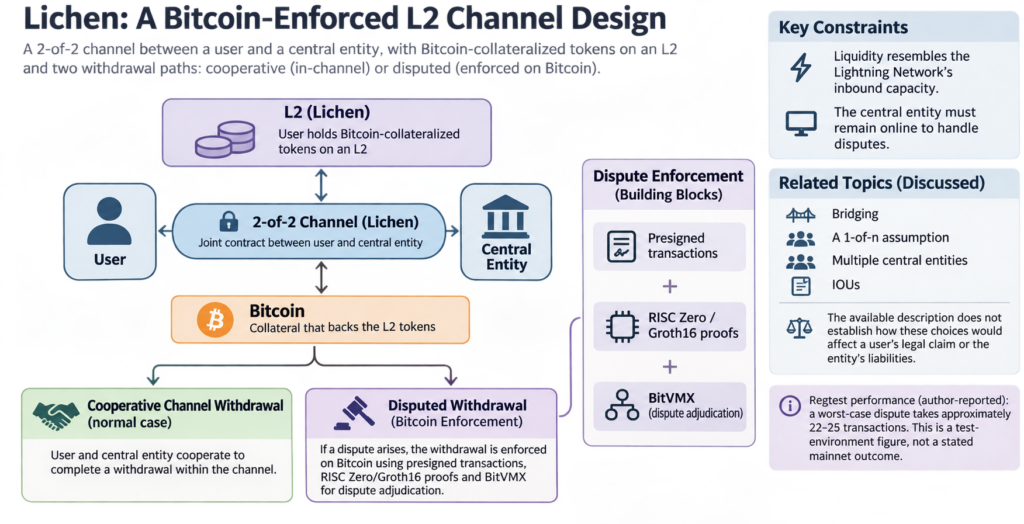
In a report published on November 11, 2026, Lichen was described as a design in which a user and a central entity establish a 2-of-2 contract. The user holds Bitcoin-collateralized tokens on an L2, while withdrawal depends on either cooperation within the channel or, if a dispute arises, enforcement on Bitcoin.
The proposed withdrawal mechanism combines presigned transactions, RISC Zero/Groth16 proofs and BitVMX dispute adjudication. Under normal conditions, the user and central entity cooperate to complete a withdrawal within the channel. In a dispute, the process moves to Bitcoin. That distinction matters for custody: the design does not remove the central entity from the ordinary withdrawal path, even as it describes a way to resolve disputes without trusting that entity to cooperate.
The account also identifies constraints. Liquidity resembles Lightning Network inbound capacity, and the central entity must remain online to handle disputes. It discusses bridging, a 1-of-n assumption, multiple central entities and IOUs, but the available description does not establish how those choices would affect a user’s legal claim or the entity’s liabilities. In regtest performance figures reported by the author, a worst-case dispute takes approximately 22–25 transactions; that is a test-environment figure, not a stated mainnet outcome.