Originally reported November 6, 2026, at 14:10 (UTC+8). Two industry submissions agreed that ordinary overcollateralized DeFi lending should not be treated as a securities transaction, but differed over vaults that let a manager move users’ assets between lending markets. Neither submission was an SEC ruling.
On November 2, Aave Labs, the Kamino Foundation and vault-infrastructure provider Veda Tech Labs published a 16-page summary arguing that decentralized lending protocols and noncustodial vaults fall outside federal securities law. They had submitted a more detailed, confidential version to SEC staff on October 26 and requested a meeting. Their position contrasts with Under Control, an approximately 238-page vault report published in October by a coalition organized through the Crypto Council for Innovation (CCI), led by Morpho, Bitwise and Galaxy and drafted by Chapman and Cutler.
The custody and obligation question
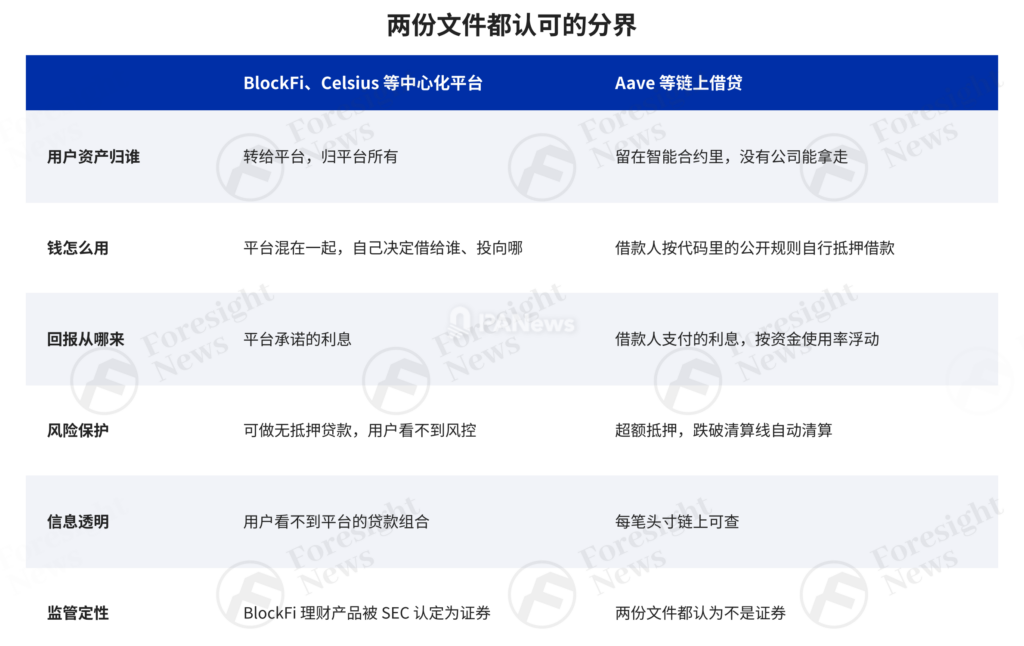
Both submissions distinguish on-chain, overcollateralized lending from centralized interest accounts. In the article’s account, customers of platforms such as BlockFi and Celsius transferred ownership of deposited assets to the platform, which managed pooled funds and owed customers repayment. BlockFi agreed in 2022 to pay $100 million to settle with the SEC and several states over its interest accounts. After Celsius entered bankruptcy, a court ruled under its customer terms that the platform owned deposited assets, leaving those customers with unsecured claims.
The two submissions argue that a conventional Aave deposit works differently: assets remain in smart contracts, borrowing requires excess collateral, liquidation follows preset thresholds, and rates are calculated from publicly visible pool utilization. Those features make positions inspectable on-chain; they do not, by themselves, settle every question about legal rights or a vault manager’s discretion.
That discretion is the dispute. A manager may allocate a vault’s deposits among lending markets, including for products distributed through exchanges and financial-technology firms. The question put to the SEC is whether users are relying on that manager’s choices in a way that makes their vault interests securities.
Two proposed boundaries—not two rules
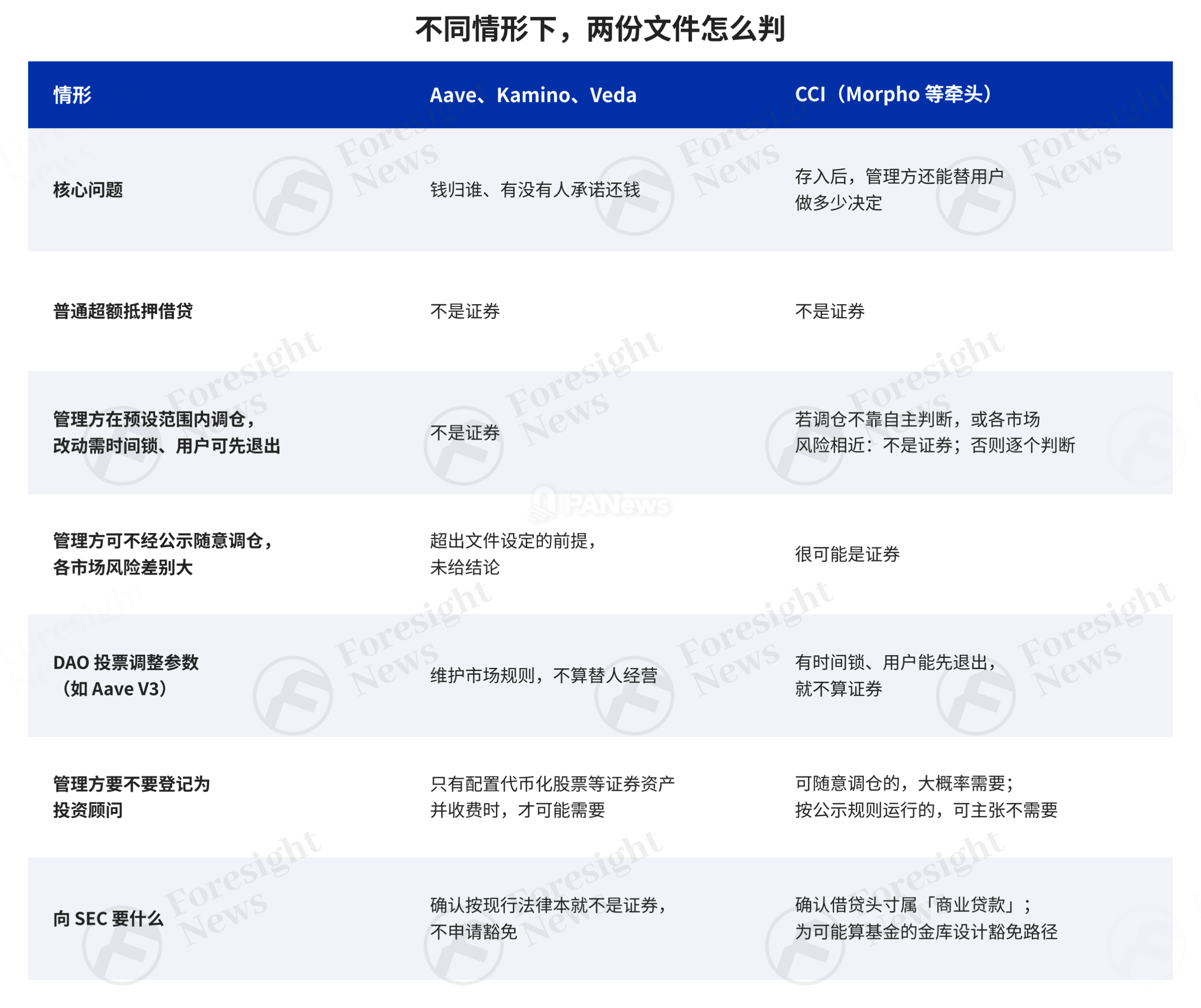
CCI focuses on how much control a manager retains and whether users can see changes and exit. Its proposed ten-condition framework includes limits on permitted asset destinations; segregated assets and on-chain user-share records; independent code audits; visible positions and permissions; controls on conflicts of interest; and advance notice, time locks and an exit window for material changes. It also calls for qualified custody and disclosure where assets cannot be verified on-chain. CCI argues that vaults meeting all ten conditions should not be treated as securities. Where a manager can move funds among materially different markets without notice, CCI sees a stronger case for securities regulation; it proposes an exemption route, including a designated company responsible for SEC-facing obligations, for vaults that would otherwise fall within that regime.
The Aave–Kamino–Veda submission places more weight on its asserted ownership and obligation structure. It argues that users retain ownership, a manager cannot take possession or move assets beyond preset permissions, and no one promises principal or interest. On that reasoning, it says neither a security-like note nor the common enterprise required for an investment contract exists, even if active allocation could involve managerial effort. Its conclusion depends on constraints including independent approval and a time lock for major changes to strategy or permissions, giving users a chance to leave. It asks the SEC to confirm that qualifying protocols and vaults already fall outside securities law, rather than create an exemption. It separately acknowledges that a manager advising for compensation on securities such as tokenized stocks may face investment-adviser requirements.
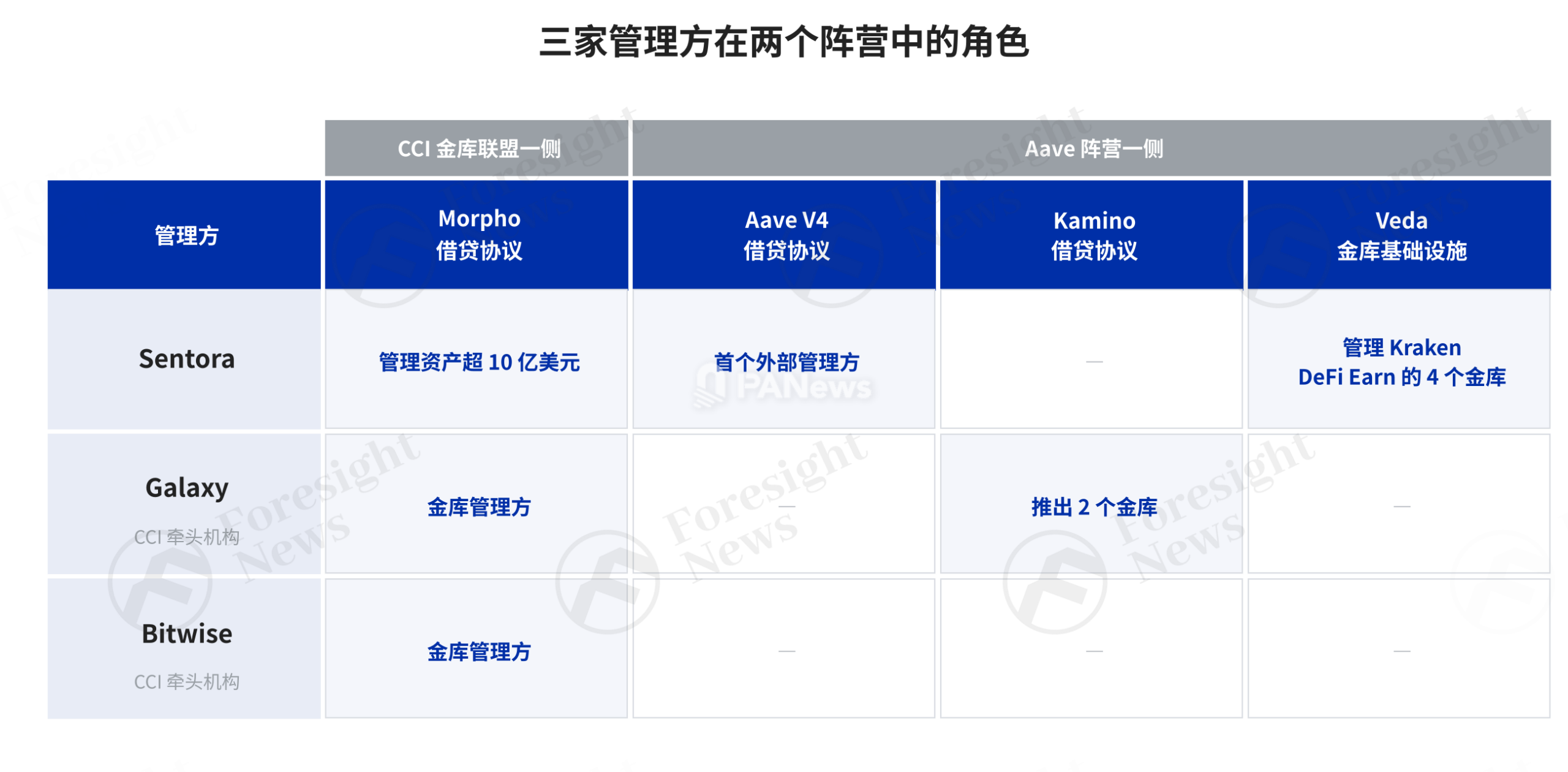
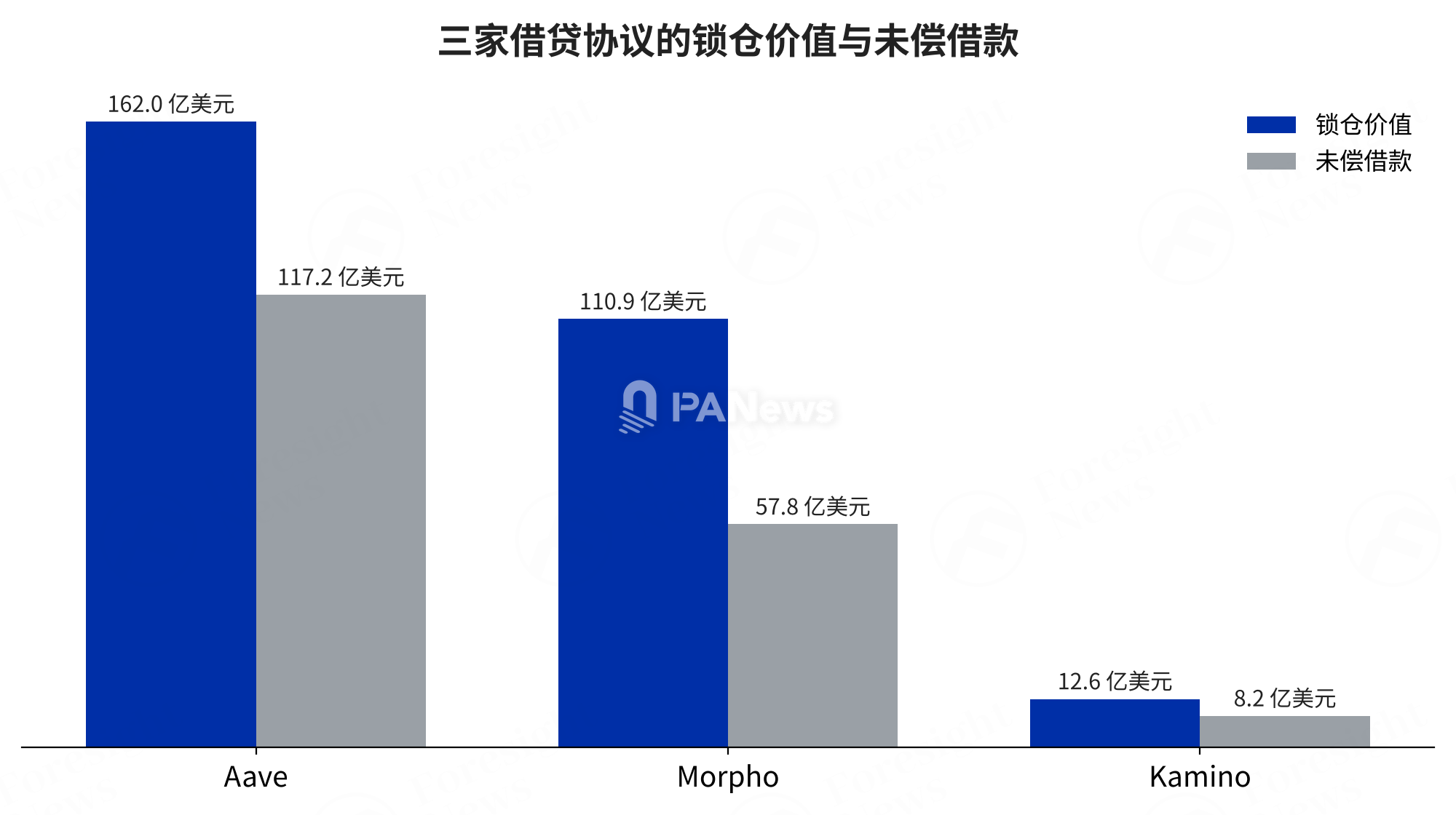
The stakes extend to the products behind exchange-facing yield interfaces. The original report said Aave’s V3 deposits were largely in public pools governed by DAO-set parameters, while V4 had introduced an external manager, Sentora. Morpho’s model assigns market selection and exposure limits to vault managers; the report identified Coinbase and Robinhood products built on Morpho vaults. It also described managers reallocating funds within Kamino V2 vaults and Veda vaults used for products including Kraken DeFi Earn. These arrangements make the scope of a manager’s authority—not a generic “DeFi” label—the relevant distinction.
As of the original report, the SEC had not publicly responded to Aave Labs, Kamino and Veda’s meeting request. The competing submissions remain arguments about how existing law should apply, not confirmation that any particular vault is exempt or that its disclosed assets cover all customer obligations.
Source: panewslab.com (originally published 2026-11-06 14:10 UTC+8)