
Historical report: BigTime published its analysis on November 12, 2026, at 10:51:51 UTC+08:00, using information checked through November 9. The incident figures and platform assurances below are reported claims, not audited findings.
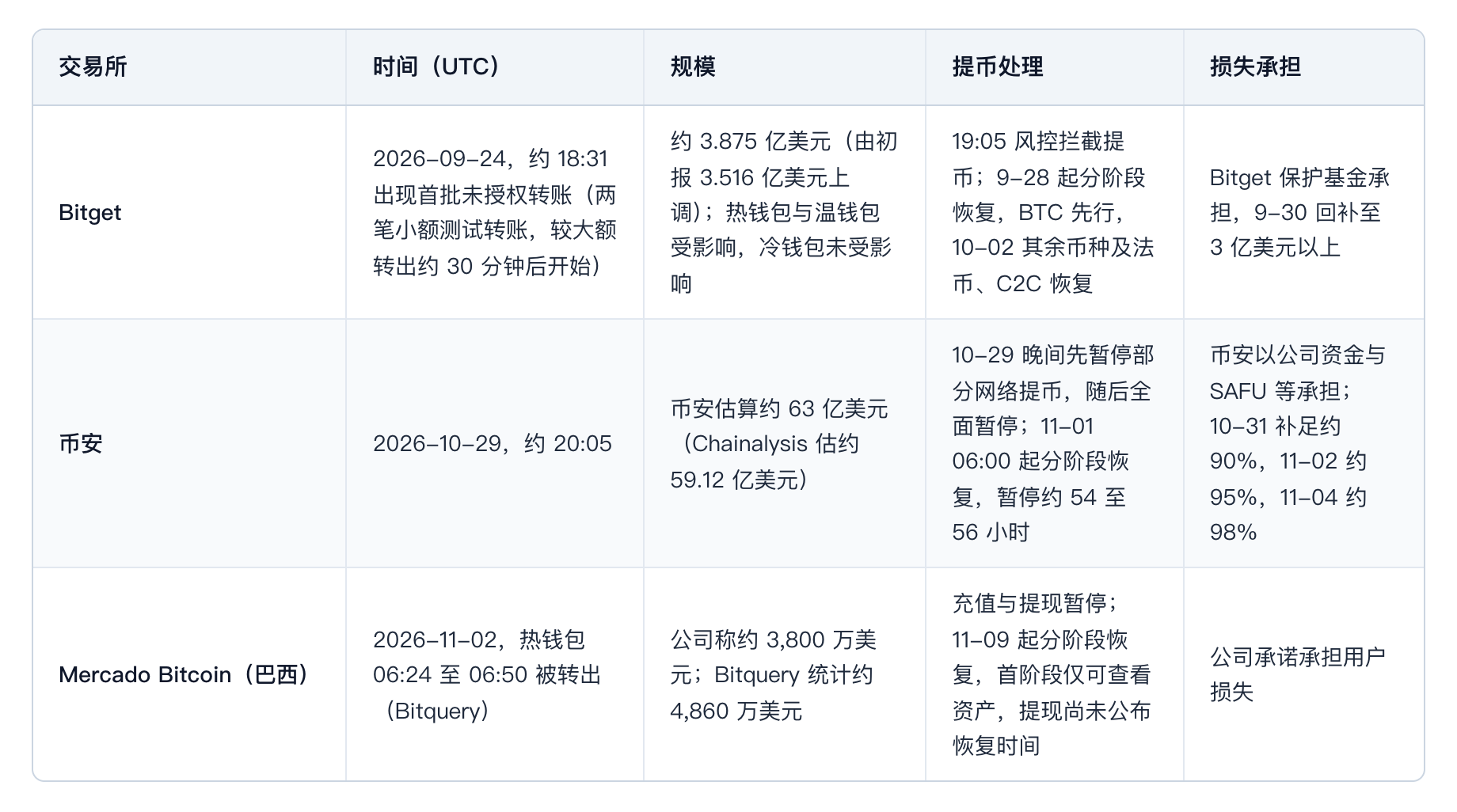
BigTime examined reported thefts at Bitget, Binance and Mercado Bitcoin over a six-week period from September to November 2026. All three platforms said they would cover customer losses. That promise matters, but it does not make funds immediately available: withdrawals were interrupted, and Mercado Bitcoin had not announced a withdrawal-restoration time when BigTime reported.
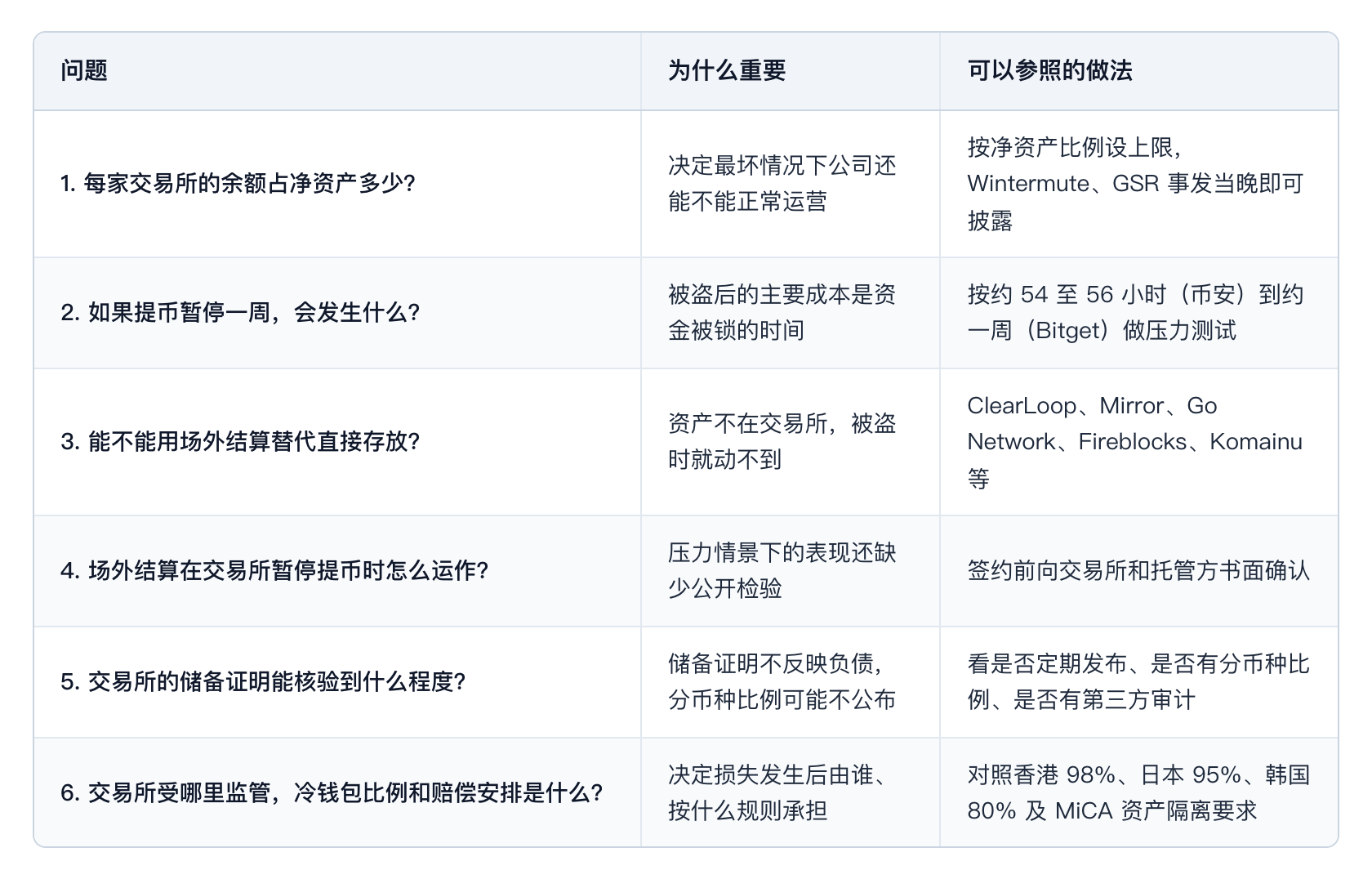
For an institution, the first question is therefore not just whether an exchange will ultimately repay it. It is how much it holds there, who controls those assets, and what happens if withdrawals or settlement stop.
Set limits on assets held at exchanges
BigTime proposes setting a balance ceiling for each exchange relative to an institution’s net assets. Cointelegraph reported that, on the night of the Binance incident, Wintermute CEO Evgeny Gaevoy put his firm’s Binance exposure below one-fifth of net assets; GSR CEO Xin Song put GSR’s below one-twentieth. Those statements describe their reported exposures, not a universal safe limit.
A ceiling can constrain exposure to one venue, but assets within it remain at that exchange. It also needs to account for time: BigTime reported that Binance withdrawals were paused for roughly 54–56 hours, Bitget took about a week to restore withdrawals for all assets, and Mercado Bitcoin had not given a restoration date as of publication.
Move custody off-exchange—but examine the remaining claim
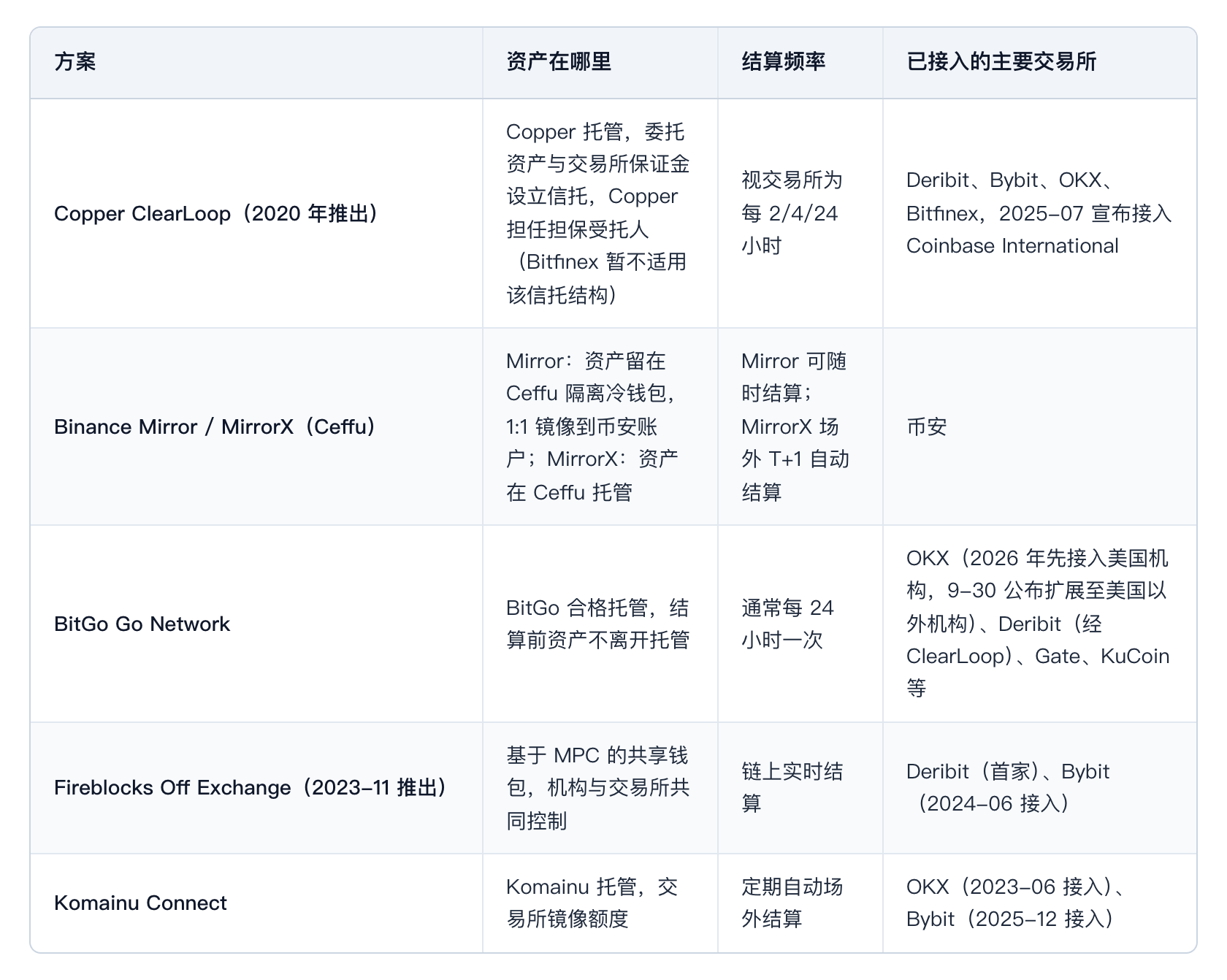
Off-exchange settlement separates custody from trading. A third party holds assets while an exchange grants trading capacity against them, with gains and losses settled at agreed intervals. BigTime reported that Binance, OKX, Bybit and Bitget had connected to one or more custody providers. Bitget announced its Open Custody Network on November 5, incorporating six custody partnerships it had disclosed on October 13.
This structure can reduce the assets an exchange holds directly. It does not remove every exchange or counterparty obligation. Trading profits accrued between settlements remain a claim on the exchange until settled, and custody introduces the custodian’s own security and legal-structure risks. BigTime said it found no public account establishing how customers using Mirror, MirrorX or triparty custody settled during Binance’s withdrawal pause. An institution would need to establish whether its custodied assets could still move, and how settlement would work, under such a pause.
Treat reserve disclosures as partial evidence
Binance’s October 1 proof-of-reserves snapshot reported ratios of 100.35% for BTC, 100.00% for ETH and 103.88% for USDT. After the reported theft, Binance said a zero-knowledge proof based on an October 31, 00:00 UTC snapshot covered 10 assets and showed at least 1:1 backing for user assets; BigTime said public reports did not provide per-asset ratios for that snapshot. OKX’s November 4 monthly report listed 108% for BTC, 101% for ETH and 106% for USDT.
These are platform disclosures, not a complete assessment of liabilities, legal ownership or an exchange’s ability to absorb a loss. BigTime also reported that Binance used about half of its SAFU protection fund on October 31 and promised to restore it to roughly $1 billion without specifying a timetable. The fund was much smaller than the approximately $6.3 billion loss Binance itself estimated; according to BigTime, covering the remainder chiefly depended on corporate funds.
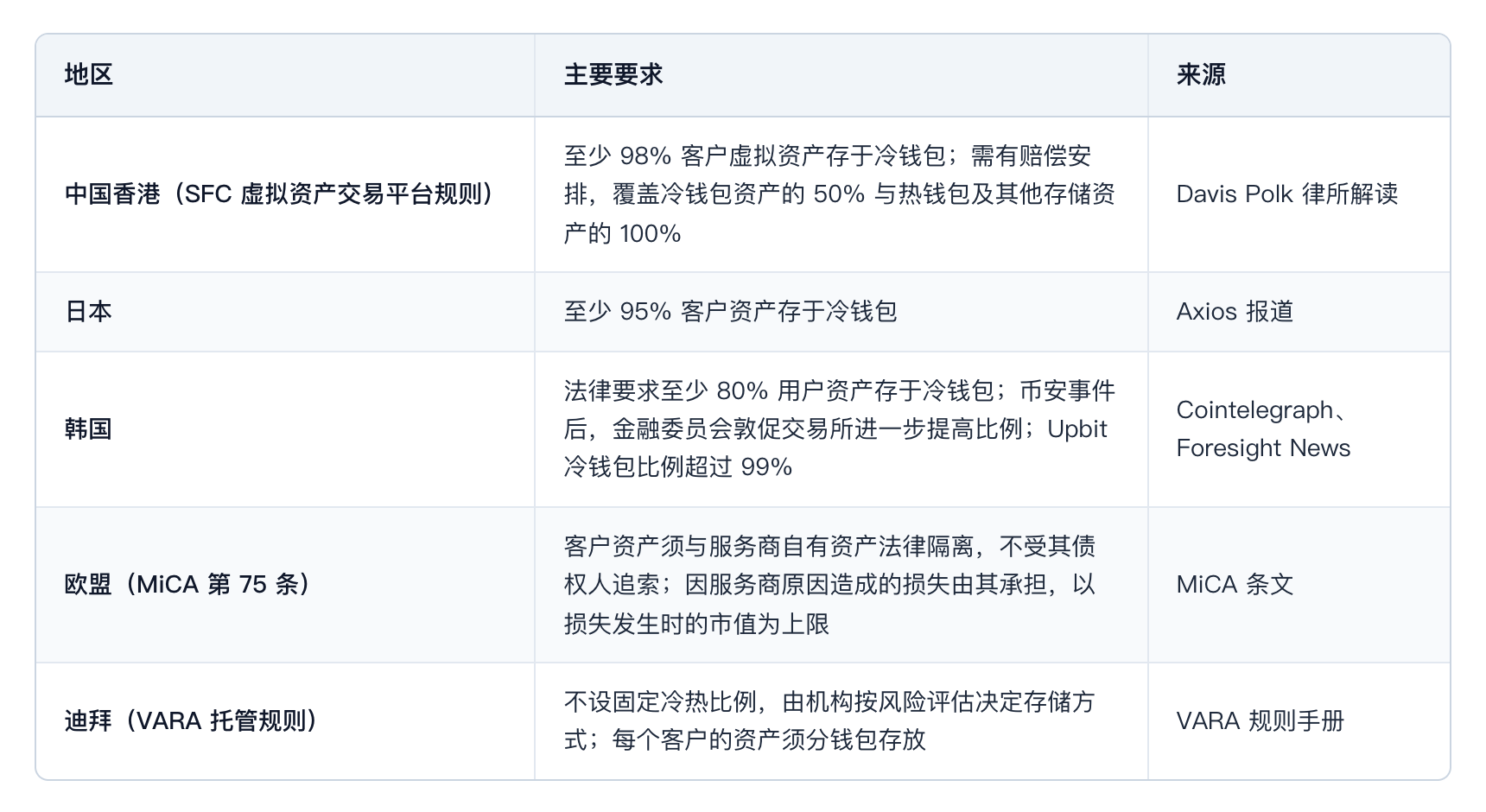
BigTime’s figures draw on platform statements, third-party data and media reports with differing methods and reporting dates. Its account did not establish that the promised compensation had been independently verified or that any particular off-exchange arrangement worked during the Binance pause. Regulatory custody requirements discussed in the original analysis also relied in part on law-firm or media interpretations rather than regulatory text.
Source: techflowpost.com (originally published 2026-11-12 10:51 UTC+8)